

♥ Wishlist
Compare 55 verified Toasters for Fast and Convenient Breakfasts products in Australia. Reviews, ratings, pros, cons and buying advice updated for October 2026.


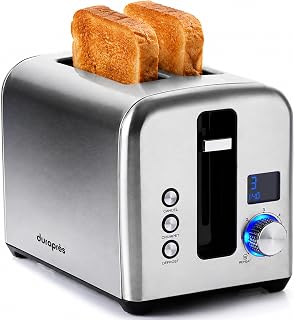


Choosing a toaster in Australia is less about finding the appliance with the most buttons and more about matching the toaster's heating performance, slot design, controls, capacity, safety features and build quality to the way your household actually uses it. A good toaster should brown bread consistently, accommodate the types of slices you normally eat and make everyday operation simple.
For Australian kitchens, it is also worth considering bench space, power requirements, cleaning access and the range of bread products commonly used at home. Standard sliced bread, thick-cut bakery bread, sourdough, English muffins, crumpets and frozen slices can all place different demands on a toaster. A model that performs well with thin sandwich bread may not be equally convenient for thick artisan slices.
This buying guide is designed for shoppers comparing toaster specifications and features before purchasing. Product specifications, configurations and retailer availability can change, so check the current manufacturer's information and retailer listing before making a final decision.
Capacity is one of the easiest specifications to narrow down. A two-slice toaster is generally suitable for individuals, couples and smaller kitchens, particularly when only one or two slices are prepared at a time. It usually occupies less bench space and can be a sensible choice where the toaster is stored away after use.
A four-slice toaster is more practical for families or households where several people eat toast at the same time. Four-slice models can reduce waiting between batches, although they generally require more counter space. Some four-slot designs provide independent controls, allowing different browning settings to be selected for separate pairs of slices.
Slot dimensions can be more important than the number printed on the toaster's marketing materials. If you regularly buy thick sourdough, farmhouse bread, fruit loaf, crumpets or other substantial slices, narrow slots can become frustrating.
Wide slots provide greater flexibility, but width alone does not tell the whole story. Consider the usable slot length and depth as well. Large slices can protrude above a slot or leave sections of bread insufficiently toasted if the heating elements do not cover the relevant area evenly.
Shoppers who mostly use standard supermarket sandwich bread may not need an especially wide-slot design. Those who alternate between ordinary sliced bread and thicker bakery products should prioritise a toaster designed to accommodate both.
Even browning is one of the most important practical characteristics of a toaster. The numbered browning control is useful, but the number of settings does not automatically indicate superior performance. What matters is whether the toaster can produce predictable results across the settings you actually use.
Heating elements positioned around the bread help determine how evenly each surface is toasted. Uneven heating can produce pale areas alongside heavily browned sections, while inconsistent timing can mean that the same setting produces noticeably different results from one cycle to the next.
When comparing models, look for information about heating-element configuration, electronic timing, browning controls and the manufacturer's intended bread capacity. Independent customer feedback can also be useful for identifying recurring complaints about uneven results, although individual experiences should not be treated as controlled product testing.
Most modern toasters provide a browning dial or electronic control. The practical benefit is the ability to repeat a preferred level rather than relying on guesswork.
A toaster with several selectable levels can be useful in a household where people have different preferences. However, a larger number of settings does not necessarily mean that every setting will be meaningfully different. Ease of adjustment and repeatability are more useful criteria than the headline number of levels.
Extra controls can improve convenience when they solve a genuine everyday problem. A defrost function is useful for bread stored in the freezer because it can coordinate thawing and toasting rather than requiring a separate thawing step.
Reheat is useful when toast has cooled but does not need another full browning cycle. A cancel button is an important basic control because it allows the user to stop a cycle immediately.
These functions are particularly worthwhile when their controls are clearly labelled and easy to operate. A complicated interface can reduce the benefit of otherwise useful features.
The bread-lift mechanism deserves more attention than it usually receives. A higher-lift function can make it easier to remove smaller items such as English muffins or shorter slices without reaching into the hot slot.
A smooth lever is also preferable to a mechanism that feels awkward or difficult to operate. If the toaster is intended for frequent family use, simple controls can be more valuable than decorative features.
Extra-wide slots are useful for shoppers who regularly use thick bread and bakery-style slices. They can also provide greater flexibility when bread varies in size. Before purchasing, however, check the manufacturer's stated slot dimensions rather than assuming that every model described as wide-slot has the same capacity.
Independent controls are especially useful on four-slice toasters. Two pairs of slices can be operated at different browning levels, which is convenient when two people want different results.
A removable crumb tray makes routine cleaning considerably easier. Bread produces crumbs during normal use, and those crumbs can accumulate around the heating area and inside the appliance.
When comparing models, check whether the crumb tray is genuinely removable and whether it can be accessed without moving the toaster into an awkward position. A tray that is easy to remove encourages more regular cleaning.
Integrated cord storage can help keep the bench area tidy. This is a small feature, but it can matter in kitchens where appliances share limited counter space.
Safety should take priority over appearance or extra functions. Look for a toaster with appropriate automatic shut-off and mechanisms intended to prevent prolonged operation. Never use a toaster as a substitute for supervision, and do not insert metal objects into the slots while the appliance is connected to power.
Keep the toaster on a stable, heat-resistant surface with adequate clearance around it. Follow the manufacturer's instructions regarding ventilation, cleaning and operation.
Stainless steel is commonly chosen for its appearance and its ability to complement modern kitchen appliances. Metal housings can also give a toaster a substantial appearance, although exterior material alone does not determine heating performance or longevity.
Stainless steel surfaces can show fingerprints, water marks and smudges, so shoppers who prioritise a consistently polished appearance should consider how easy the exterior is to maintain.
Plastic-bodied models can be lighter and may suit shoppers looking for a simpler appliance. A plastic exterior is not automatically an indication of poor performance. The heating system, internal components, controls and construction quality are more meaningful considerations.
Many contemporary designs combine metal and plastic components. This can provide a balance between appearance, weight, cost and heat management. Examine the areas that receive regular handling, including the lever, buttons, dial and crumb tray, because these components have a direct impact on everyday usability.
Bench space is an easy consideration to overlook when shopping online. A four-slice toaster can have a substantially larger footprint than a compact two-slice model, and a wide-slot design may also require additional clearance.
Measure the intended position before ordering. Consider not only the appliance footprint but also the space needed to operate the lever, remove the crumb tray and safely access the controls.
Neither configuration is universally better. The right choice depends on household size, breakfast routines and available space.
A two-slice toaster is often the more efficient choice when one or two slices are normally prepared at a time. A four-slice toaster becomes more attractive when several slices are required simultaneously or when different browning preferences need to be accommodated.
Four-slot designs can also be useful for families with children because multiple servings can be prepared without running repeated cycles. However, larger capacity should not be treated as a reason to buy a larger appliance if the additional slots will rarely be used.
Most conventional toasters are designed around standard sliced bread. For this use, consistent browning, accurate controls and easy cleaning are usually more important than specialised features.
Thick bread makes slot dimensions particularly important. Choose a design that clearly accommodates the thickness and dimensions of the bread you normally purchase.
English muffins can benefit from a high-lift mechanism and a suitable slot design. The ability to remove smaller items safely is more important than simply having a high maximum browning setting.
Crumpets can leave more crumbs than conventional bread and may require a toaster that is easy to clean. A removable crumb tray and accessible controls are therefore worthwhile features.
If you frequently freeze bread, a defrost function can be a practical convenience. Compare how easily the defrost control can be activated and whether the toaster provides separate browning controls for the final toast level.
Digital toasters can provide precise-looking controls, displays or electronic programmes, while traditional models commonly use mechanical dials and levers. The best option depends on how much control you want over the process.
Digital controls can appeal to shoppers who prefer repeatable settings and a modern interface. Traditional controls may be preferable for those who want straightforward operation without unnecessary electronics.
Do not assume that a digital interface guarantees better toast. Evaluate the heating system, slot design, control accuracy, construction and cleaning features alongside the interface.
When researching the Australian toaster market, it is useful to compare established brands alongside individual models rather than selecting solely by appearance. Brands such as Breville, Sunbeam, Russell Hobbs, KitchenAid, De'Longhi, Smeg and Morphy Richards offer toaster ranges with different approaches to capacity, controls and design.
Brand reputation should be one part of the evaluation rather than the deciding factor on its own. Compare the exact model's specifications, warranty information, operating instructions, slot dimensions and current retailer feedback before buying.
Do not judge a toaster from a product title alone. The specification section can reveal important differences between models that look similar in photographs.
Specification comparisons are particularly important when two products have similar prices but different capacities or features. Always verify the current specification because manufacturers can update product ranges and model variants.
A toaster can look excellent on a kitchen bench while still being inconvenient for the bread you normally use. Exterior styling should be considered after practical requirements such as slot dimensions, controls and cleaning.
Choosing a toaster without checking slot size is one of the easiest ways to end up with a poor match. If you buy thick bread, check the specifications before focusing on colour or finish.
A toaster with many browning levels is not automatically superior. Consistency between cycles and useful adjustment are more important than a large number printed around a dial.
Crumbs are unavoidable. A toaster that is difficult to clean can become inconvenient over time, so examine the crumb-tray arrangement before buying.
Four-slice capacity can be useful, but a larger appliance consumes more bench space. If most mornings involve only one or two slices, a compact model may be the more practical choice.
Similar-looking appliances can have different specifications. Always compare the precise model number rather than relying on a brand name or product photograph.
Customer ratings can provide useful information, but they should be interpreted carefully. A high overall rating does not explain whether a toaster suits your particular needs, while a small number of negative reviews may identify recurring issues worth investigating.
Look for patterns rather than isolated comments. Pay particular attention to repeated observations about uneven browning, control accuracy, slot dimensions, lever operation, cleaning, noise, durability and compatibility with different bread types.
Price should be evaluated against features and expected use rather than treated as a direct measure of quality. A basic toaster can be entirely appropriate for someone who mainly prepares standard sliced bread, while a household that regularly makes several batches or uses thick bakery bread may benefit from additional capacity and controls.
Before comparing current prices, identify your essential requirements. This prevents paying for decorative features that do not improve your daily experience. At the same time, avoiding all premium features solely to reduce the initial price can be false economy if the appliance does not suit your routine.
When checking prices in Australia, compare the exact model, included components, retailer terms, warranty information and current availability rather than comparing headline prices for similar-looking products.
A toaster is normally used for short periods, so convenience and correct operation are important considerations alongside energy use. Avoid repeatedly running unnecessary cycles, and use the appropriate setting for the bread rather than relying on excessive browning times.
Keep the appliance clean according to the manufacturer's instructions and avoid operating it when damaged. Good everyday practices can help maintain safe and reliable use.
Allow the appliance to cool and follow the manufacturer's cleaning instructions before removing the crumb tray. Empty accumulated crumbs rather than allowing them to build up inside the appliance.
Use the cleaning method recommended by the manufacturer for the toaster's exterior material. Stainless steel finishes may require different care from coated or plastic surfaces.
Electrical appliances should not be immersed or exposed to water in a manner that conflicts with the manufacturer's instructions. Cleaning should be performed with the appliance disconnected from power and sufficiently cool.
If bread becomes stuck, disconnect the appliance from power and follow the manufacturer's instructions. Never insert knives, forks or other metal objects into an electrically connected toaster.
Do not immediately reach into the slots. Cancel the cycle, disconnect the toaster from the power supply and allow it to cool. Follow the manufacturer's instructions for safely removing the obstruction. If the appliance repeatedly traps bread, investigate whether the bread dimensions are appropriate for the toaster and whether the appliance requires inspection or replacement.
Family buyers should prioritise capacity, speed of preparation, independent controls and ease of cleaning. Four-slice models can reduce the number of cycles required during busy mornings, while independent controls can accommodate different preferences.
For households with children, straightforward controls and a high-lift function may be particularly useful. Safety features and correct placement should remain more important than convenience features.
In a compact kitchen, dimensions can be more important than capacity. A two-slice toaster with a relatively small footprint may be easier to store and leave sufficient room for other appliances.
Consider whether the toaster will remain permanently on the bench or be stored after each use. If it is moved frequently, weight, cord management and ease of handling become additional buying considerations.
Shoppers who frequently buy sourdough should begin with slot dimensions. Bread that is wider or thicker than conventional sliced bread can be difficult to toast evenly in a narrow or short slot.
Also consider whether the toaster's heating area is suitable for the bread dimensions. A slice that extends substantially beyond the heated section may not brown evenly. If artisan bread is a regular part of your breakfast routine, prioritise compatibility over decorative features.
Ease of operation can be more important than advanced functionality. Clearly marked controls, a smooth lever, readable settings and a high-lift feature can make everyday use easier.
A model should also be simple to clean without requiring awkward handling. Where possible, compare photographs of the controls with the written specifications and operating instructions before purchasing.
Good value does not necessarily mean the lowest price. A toaster provides better value when its capacity, bread compatibility, controls, construction and maintenance requirements align with how often it will be used.
A shopper who makes two slices every morning may gain little from a large premium four-slice appliance. Conversely, a busy household could find that additional capacity and independent controls justify spending more than the entry-level price point.
Once you have identified several candidates, score them against the features that actually matter to your household. A simple comparison can prevent attractive styling or promotional language from dominating the decision.
Prioritise a compact two-slice design, manageable dimensions and simple controls. Slot width should still be checked if you regularly use thick bread.
Prioritise four-slice capacity, independent controls and easy cleaning. These features can have a greater everyday impact than premium styling.
Prioritise wide and suitably long slots. Verify the actual specifications rather than relying on descriptions such as premium, family-size or extra-wide.
A clearly labelled defrost function is a useful convenience. Compare it alongside normal browning controls so that frozen bread can be prepared according to your preferred result.
Look for clear controls, a straightforward lever and an easy-to-access cancel function. More features are not necessarily better if they make daily use unnecessarily complicated.
Brands such as Smeg and KitchenAid can be worth comparing when exterior design is an important part of the buying decision. Still, confirm the practical specifications before choosing a toaster primarily for its appearance.
Australian buyers should purchase appliances intended for the Australian market and verify the electrical specifications before use. Do not assume that a visually identical overseas model has the same electrical configuration or suitability for Australian household power.
When shopping online, check the exact model number and Australian product documentation. Imported appliances may require additional consideration, and using an unsuitable electrical product can create safety risks.
Warranty terms can vary between brands, models and markets. Before buying, read the applicable manufacturer's warranty documentation rather than relying solely on a retailer's summary.
Check what period applies, what exclusions are listed, whether registration is required and what documentation may be needed if a problem develops. Keep your purchase records and model details in a safe place.
Replacement may be appropriate when an existing toaster has a damaged cord, unreliable controls, repeated faults, significant physical damage or other safety concerns. Performance problems such as persistent uneven heating or a malfunctioning lever can also indicate that continued use is no longer worthwhile.
Do not continue using an appliance simply because it still produces toast if there are signs of electrical damage or unsafe operation. Follow the manufacturer's guidance and applicable Australian electrical-safety advice.
Use bread that fits comfortably within the toaster's intended slot dimensions and begin with a moderate browning setting. Bread thickness, moisture content, freshness and whether it is frozen can all affect the final result.
Keep the crumb tray clean and avoid repeatedly selecting an unnecessarily high setting. If the same bread produces inconsistent results, check whether the toaster requires cleaning or whether the bread itself varies substantially between slices.
There is no single best toaster for every household. A suitable choice depends on capacity, bread type, bench space, preferred browning level, convenience features and budget. A two-slice toaster can be sufficient for smaller households, while a four-slice model can be more practical for families.
Not automatically. Four-slice models provide greater capacity but take up more space. If you rarely need more than two slices at once, a compact two-slice model may be the better match.
Look for sufficiently wide and long slots and verify the manufacturer's stated dimensions. Sourdough slices can vary considerably in thickness and size, so slot compatibility is more important than the toaster's marketing category.
A wide-slot toaster is worth considering if you regularly eat thick bread, bakery slices, crumpets or other products that may not fit comfortably into narrow slots. If you exclusively use standard sliced bread, a standard slot may be adequate.
Higher price does not guarantee better results. Premium models may offer additional materials, design features, controls or capacity, but shoppers should compare specifications and real-world feedback to determine whether those additions are useful for their household.
There is no universally ideal number. What matters is whether the available settings provide useful adjustment and repeatable results. A toaster with fewer well-calibrated settings can be more practical than one with many settings that are difficult to distinguish.
If you frequently freeze bread, defrost can be a convenient feature. If you normally use fresh bread, it may not be essential.
A high-lift function helps raise smaller pieces of bread or similar items higher above the slot, making them easier to remove without placing fingers close to hot surfaces.
Cleaning frequency depends on how often the toaster is used and how many crumbs it produces. Empty the crumb tray regularly and follow the manufacturer's cleaning instructions rather than allowing debris to accumulate.
A hot toaster should be allowed to cool appropriately before storage, and the manufacturer's instructions should be followed. Do not store a heated appliance in a confined space where residual heat could create a hazard.
Stop using it if there are signs of electrical damage, burning smells, sparking or other unsafe behaviour. Consult the manufacturer's instructions and warranty information. Do not attempt electrical repairs unless you are appropriately qualified.
Yes, when used alongside specifications. Look for recurring comments about browning consistency, slot size, controls, cleaning, durability and ease of use. Verify that reviews relate to the exact model being considered.
The best toaster is the one that matches your bread, household size, kitchen space and daily routine rather than the model with the longest feature list. Start with capacity and slot dimensions, then compare browning control, heating consistency, useful functions, cleaning, construction and safety.
For an Australian purchase, verify the current model number, specifications, warranty information and retailer details before ordering. Product ranges and availability can change throughout 2026, so the most reliable buying decision comes from checking current information at the time of purchase.
Whether you are replacing a basic toaster, upgrading to a four-slice family model or looking for a wide-slot appliance for sourdough and other bakery bread, compare the products against your own priorities first. A focused specification comparison is usually more useful than choosing solely from brand reputation, appearance or headline ratings.