

♥ Wishlist
Compare 48 verified Dehumidifiers for Australian Homes products in Australia. Reviews, ratings, pros, cons and buying advice updated for October 2026.


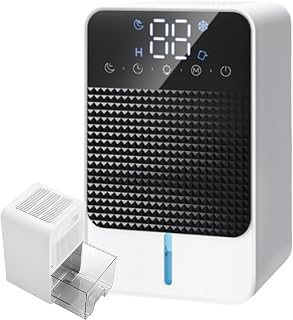


Choosing a dehumidifier for an Australian home involves more than comparing the advertised moisture-removal capacity. Climate, room size, ventilation, temperature, electricity consumption, noise, drainage options and the type of moisture problem all affect whether a particular model is suitable. A compact appliance that works well in a bedroom may be inadequate for a damp basement, laundry or large open-plan living area.
This guide is designed to help Australian shoppers compare dehumidifiers by the characteristics that matter most in everyday use. Product specifications, included features and current customer feedback should always be checked before purchase because models, variants and availability can change during 2026.
High indoor humidity can occur in many Australian homes, particularly in coastal, tropical and subtropical areas, during wet weather, or in rooms where moisture is regularly produced. Bathrooms, laundries, kitchens, bedrooms and poorly ventilated storage areas can all experience elevated humidity.
A dehumidifier removes water vapour from indoor air and collects the extracted moisture in a tank or sends it through a continuous drainage connection, depending on the model. Reducing excessive indoor humidity can make a room feel more comfortable and may help manage conditions associated with persistent dampness.
It is important, however, to distinguish between controlling indoor humidity and repairing a moisture source. A dehumidifier cannot fix leaking plumbing, roof leaks, rising damp, flooding, inadequate waterproofing or major building defects. Persistent moisture should be investigated at its source.
Compressor, or refrigerant, dehumidifiers draw humid air across a cooled surface. Moisture condenses and is collected before drier air is returned to the room. These models are commonly considered for general household humidity control and can be particularly useful where room temperatures are moderate to warm.
When comparing compressor models, look beyond the headline extraction figure. Consider the conditions under which that figure was measured, the recommended room size, operating temperature range, tank capacity, drainage arrangements and power consumption.
Desiccant models use an absorbent material to capture moisture from air rather than relying on a conventional refrigeration system. Their operating characteristics can make them worth considering for cooler rooms or particular applications where low-temperature performance is important.
Desiccant appliances can also have different energy and heat-output characteristics from compressor models. A buyer should therefore consider both moisture removal and the overall effect the appliance has on the room.
Small thermoelectric or Peltier dehumidifiers are designed primarily for compact spaces. They can be useful where portability and a small footprint are more important than rapid moisture removal.
They should not automatically be treated as alternatives to full-size household dehumidifiers. For a large bedroom, living room, laundry or persistently damp area, compare the appliance's actual moisture-removal capability with the scale of the problem rather than choosing purely on compactness or price.
Capacity is one of the most important specifications to understand. Manufacturers may express moisture removal in litres per day, but the quoted figure depends on testing conditions. A higher nominal extraction rate does not necessarily mean that one model will outperform another in every Australian home.
Use room dimensions as a starting point, but also consider ceiling height, ventilation, outdoor climate, indoor temperature, how frequently doors and windows are opened, and how much moisture is generated.
A specification such as a particular number of litres per day should not be interpreted as a guaranteed amount of water that will be collected in every household. Extraction varies with temperature and relative humidity, among other conditions.
When comparing two dehumidifiers, try to establish whether their quoted extraction figures were measured under comparable conditions. If the testing conditions differ, comparing the numbers alone can create a misleading impression of performance.
Relative humidity describes the amount of moisture in the air relative to the maximum amount the air can hold at a particular temperature. A dehumidifier with a built-in humidistat can monitor humidity and automatically adjust operation according to the selected setting.
For everyday household use, many people aim for a comfortable moderate indoor humidity level rather than attempting to make the air exceptionally dry. Excessively dry indoor air is not the goal, and the appropriate setting can vary according to the room, season and occupants.
A humidistat allows the appliance to respond to measured humidity rather than simply running continuously. This can make operation more convenient and may reduce unnecessary runtime when the desired humidity level has been reached.
When the water tank becomes full, automatic shut-off can prevent continued operation. This is especially useful for users who do not want to monitor the tank constantly.
A continuous drainage option can be extremely valuable when the dehumidifier will operate for long periods. Instead of repeatedly emptying the tank, water can be directed through a suitable drain arrangement.
Check exactly what drainage equipment is supplied with the model. A drainage connection does not necessarily mean that every installation can be completed without additional fittings or suitable positioning.
Timers are useful for bedrooms, laundries and other situations where operation is required for a defined period. Some models offer more advanced scheduling or operating modes, so compare the controls rather than assuming every appliance offers the same functionality.
Noise matters considerably when a dehumidifier is used in a bedroom, nursery, study or television room. Manufacturer noise ratings can help with comparisons, but the perceived sound can also depend on fan speed, compressor cycling and room acoustics.
If quiet operation is important, examine the stated decibel rating and read current customer feedback specifically for comments about noise at different operating speeds.
Many dehumidifiers incorporate a removable filter intended to capture airborne particles before air passes through the appliance. A washable or easily removable filter can make routine maintenance simpler.
A filter should not automatically be interpreted as a replacement for a dedicated air purifier. Dehumidification and air purification are different functions, even where an appliance provides some degree of particle filtration.
Dehumidifiers can be surprisingly awkward to move once their water tank and internal components are considered. Castors, handles and a practical body shape can make a noticeable difference when moving an appliance between rooms.
Electricity consumption deserves attention because a dehumidifier may run for several hours a day during humid periods. The appliance's power rating provides useful information, but actual electricity use depends on operating time, compressor or desiccant cycling, selected settings, humidity conditions and the way the appliance is used.
To estimate running cost, compare the appliance's power consumption with your electricity tariff and expected operating hours. A model with a higher purchase price can sometimes make more sense if its operating characteristics suit the intended use, but the decision should be based on verified specifications rather than assumptions about efficiency.
Australian shoppers should also check the current product documentation and energy-related information supplied for the specific model and variant being considered.
A physically larger dehumidifier is not automatically better, but compact dimensions often involve trade-offs. Larger household models may provide greater extraction capacity, larger tanks, stronger airflow or additional operating features.
Before buying, measure the proposed storage and operating location. Leave adequate clearance around the appliance according to the manufacturer's instructions and ensure that air intake and outlet areas are not obstructed.
Tank size affects convenience rather than simply indicating dehumidification performance. A larger tank can reduce how frequently it needs to be emptied, while a smaller tank may be perfectly adequate if continuous drainage is available.
For overnight bedroom use or unattended operation, tank capacity and automatic shut-off deserve particular attention. For a laundry or heavily damp area, continuous drainage may be more useful than an exceptionally large tank.
Specifications should be evaluated as a group rather than one at a time. A practical comparison should include:
Brand familiarity can be useful when narrowing a shortlist, but it should not replace model-level comparison. Australian shoppers may encounter established appliance brands such as Breville, Delonghi, Ausclimate, Mitsubishi Electric, Goldair and Kogan, alongside other brands and private-label products.
The right choice depends on the specifications and features of the individual model. Even within a single brand, different units can target very different room sizes, climates and use cases.
Bedroom buyers generally have different priorities from people shopping for a laundry or garage. Low noise, sleep settings, automatic humidity control, timer functionality and convenient tank handling can be especially valuable.
Avoid selecting a bedroom model solely because it has the highest extraction specification. If the appliance is noisy, difficult to empty or unnecessarily large for the room, its headline capacity may provide little practical benefit.
A bathroom can produce substantial amounts of moisture, especially during showers. Ventilation should remain the first line of defence where suitable ventilation is available. A dehumidifier can provide additional humidity control in appropriate circumstances.
Never position an electrical appliance where it could be exposed to direct water spray or unsafe wet conditions. Follow the manufacturer's installation and operating instructions carefully, particularly around bathrooms and other wet areas.
Laundries can benefit from convenient drainage and high moisture-removal capability because wet clothing can introduce substantial moisture into indoor air. Continuous drainage can reduce the need to repeatedly empty a tank during extended operation.
Placement also matters. Allowing sufficient airflow around the appliance and positioning it appropriately relative to the moisture source can improve practical usefulness.
Enclosed storage areas can develop persistent humidity because air movement may be limited. Before purchasing a dehumidifier for a garage, basement or similar space, check whether the appliance is designed to operate effectively at the temperatures expected there.
Temperature suitability is particularly important for compressor-based equipment. A model intended for comfortable indoor living spaces may not be the best choice for a substantially cooler environment.
Air conditioners and dehumidifiers can both influence indoor humidity, but they are designed for different primary purposes. An air conditioner is primarily intended to provide cooling, whereas a dehumidifier is specifically designed to remove moisture from air.
In warm and humid conditions, air conditioning may provide both cooling and some dehumidification. In situations where cooling is unnecessary but humidity remains high, a dedicated dehumidifier can be more directly suited to the task.
An air purifier primarily targets airborne particles and other pollutants using filtration or related technologies. A dehumidifier primarily removes water vapour. These appliances should not be considered interchangeable.
If the primary problem is excessive humidity, prioritise dehumidification specifications. If airborne particles are the main concern, investigate air-purification performance separately.
The cheapest appliance may not provide the capacity, drainage, controls or operating characteristics required for the intended room. Compare the complete specification and expected use rather than purchase price alone.
A dehumidifier's performance can change as room temperature changes. This is particularly relevant to garages, sheds, basements and cooler rooms.
Coverage claims can be difficult to compare because manufacturers may use different assumptions. Treat room-size guidance as one input rather than an absolute guarantee.
Repeatedly emptying a small water tank can become inconvenient. If long operating periods are expected, investigate continuous drainage before purchase.
An appliance that seems suitable on paper may be unsuitable for a bedroom if its operating noise is distracting. Always examine the noise specification and current customer feedback.
Filters, water tanks, drainage components and air pathways require appropriate care. A model that is difficult to clean can become inconvenient over time.
A dehumidifier can only process the air that reaches it effectively. Multiple separated rooms may not respond as though they were a single open space. Doors, walls, airflow and the physical layout of the home all matter.
Customer reviews can provide useful information that specifications do not capture, but they should be interpreted carefully. Look for recurring comments rather than relying on isolated praise or criticism.
Before placing an order through a retailer or marketplace, verify the exact model number and variant. Product names can be similar across different capacities, colours or generations.
Electrical appliances should be used in accordance with their manufacturer's instructions. Keep the dehumidifier on a stable, suitable surface and maintain the required clearance around air intakes and outlets.
Do not use an appliance in a wet environment unless the manufacturer specifically states that it is suitable for that application. Avoid blocking ventilation openings, and inspect cords, plugs, tanks and drainage components for signs of damage.
If unusual smells, excessive heat, electrical faults, leaks or abnormal operation occur, discontinue use and follow the manufacturer's safety guidance.
Empty and clean the tank according to the manufacturer's instructions. Regular attention helps prevent accumulated residue and keeps the appliance hygienic.
Follow the specified filter-cleaning schedule. A dirty filter can restrict airflow and may affect the appliance's operation.
If a drain hose is being used, periodically check its routing and connection. The hose should not be kinked or positioned in a way that prevents proper drainage.
Do not push the appliance tightly against walls, furniture or other objects if doing so conflicts with the manufacturer's required clearances. Adequate airflow is fundamental to proper operation.
If the dehumidifier is stored for an extended period, follow the manufacturer's preparation and storage instructions. Emptying and drying components may be required before storage.
If a room remains damp despite extended dehumidifier operation, investigate the underlying cause. Possible contributors include plumbing leaks, roof or gutter problems, water ingress, inadequate bathroom ventilation, condensation, poor insulation or building-envelope issues.
A dehumidifier is best viewed as part of an overall moisture-management strategy. Where a building defect is responsible for ongoing water intrusion, repairing the source is more important than continually removing the resulting moisture.
Prioritise quiet operation, a useful humidistat, sleep mode, timer controls, practical tank capacity and straightforward maintenance.
Focus on extraction capacity, airflow, room-size suitability and humidity controls. Check whether the manufacturer's stated coverage is appropriate for the room's actual size and layout.
Strong moisture removal, continuous drainage and easy maintenance are particularly useful. Mobility can also help if the appliance needs to be repositioned.
Pay close attention to the stated operating temperature range and whether the chosen technology is appropriate for cooler conditions.
Compact models make sense when space is limited and the moisture problem is relatively small. Do not expect a small thermoelectric unit to deliver the same practical capacity as a full-size household appliance.
A useful comparison should consider more than rankings. When evaluating the ten products featured on a buying guide, assess each one against the same criteria so that differences are meaningful.
There is no single best dehumidifier for every Australian household. The appropriate choice depends on room size, climate, temperature, moisture level, noise requirements, drainage needs and budget. Compare the exact specifications of shortlisted models before deciding.
Start with the manufacturer's recommended room size and moisture-extraction capacity, then account for temperature, humidity and how the room is used. A particularly damp room may require more capacity than a similarly sized room with only occasional humidity.
Neither technology is universally better. Compressor models can be strong choices for many normal household conditions, while desiccant technology can have advantages in cooler environments. The operating temperature range and intended application should guide the decision.
Electricity consumption varies by model and operating conditions. Check the stated power consumption and estimate expected usage based on your electricity tariff and likely operating hours.
Whether overnight operation is appropriate depends on the specific appliance, its safety instructions, room conditions and drainage arrangement. Features such as automatic shut-off, humidistat control and sleep mode can be useful for overnight use.
A dehumidifier does not remove existing mould contamination. It can help reduce excess humidity, which may be part of controlling conditions that support mould growth. Existing mould and the moisture source should be addressed appropriately.
Opening windows can introduce outdoor air and moisture depending on weather conditions. For targeted dehumidification, doors and windows are generally managed according to the room's ventilation needs, outdoor humidity and the manufacturer's guidance.
This depends on tank capacity, humidity, operating duration and extraction rate. A continuously drained appliance may not require routine manual emptying while operating, provided the drainage setup is appropriate.
Small models can be useful for compact spaces with modest moisture loads. Their suitability depends on actual extraction capability rather than physical size alone.
A hygrometer can provide an objective measurement of indoor relative humidity. Persistent condensation, musty conditions and dampness can also indicate a moisture-management issue, although these signs do not identify the underlying cause by themselves.
For homes and rooms that regularly experience excessive humidity, a suitable dehumidifier can be a useful tool for moisture management and comfort. Its value depends on how often it is needed, the severity of the humidity problem and whether the appliance is correctly matched to the space.
An independent buying guide should evaluate products using consistent criteria rather than relying on a single rating or headline specification. Performance, capacity, controls, noise, drainage, maintenance, energy consumption, portability and suitability for Australian conditions all deserve consideration.
Product information can change over time, so shoppers should verify current specifications, model numbers, customer feedback, pricing, availability, warranty terms and retailer conditions before making a purchase. The best choice is ultimately the model that fits the intended room and moisture problem rather than simply the product with the highest advertised capacity or the lowest price.
As of August 2026, the most useful way to compare dehumidifiers remains a needs-based approach. Start with the room, climate and moisture problem, then narrow the options by extraction capability, temperature suitability, noise, energy consumption, drainage and maintenance. Only after those factors are established should price and additional features determine the final shortlist.
For independent product research, compare the specifications of the exact models under consideration, read verified customer reviews where available, and check current information from trusted manufacturers and Australian retailers before purchasing.