

♥ Wishlist
Compare 57 verified Cricket Equipment & Gear for Australian Players products in Australia. Reviews, ratings, pros, cons and buying advice updated for October 2026.


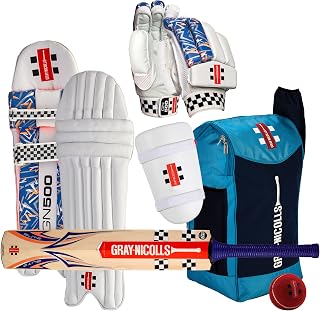


Choosing cricket equipment is not simply a matter of picking the most expensive bat, the highest-rated protective gear or the most recognisable brand. The right equipment depends on playing level, age, playing format, position, frequency of use, pitch conditions and personal preferences. Australian cricketers also need to consider local conditions, including hard wickets, outdoor heat, different ground surfaces and the demands of club, school, junior and recreational cricket.
A useful buying decision starts with the role each product performs. A cricket bat needs to provide an appropriate balance of weight, pickup and playing characteristics. Batting gloves need a secure fit and suitable impact protection. Helmets and pads need to provide dependable protection without unnecessarily restricting movement. Cricket balls need to match the intended format and level of play, while training equipment should address a specific practice objective rather than simply adding more gear to a kit bag.
Australia has a strong cricket culture spanning junior competitions, community clubs, school cricket, indoor cricket, recreational games and representative pathways. That means there is no universal definition of the “best” cricket product. Equipment that works well for a professional-style player may be excessive for occasional backyard cricket, while entry-level equipment may not provide the features or durability expected by a regular club player.
Before comparing individual products, consider where and how the equipment will be used. Outdoor club cricket generally places greater demands on equipment than occasional recreational use. Junior players also need equipment sized appropriately rather than equipment selected purely because it resembles an adult model.
The bat is usually the most individual piece of cricket equipment a batter buys. Two bats with similar advertised weights can feel completely different because of their balance, blade profile, handle construction and weight distribution. For that reason, the number printed on a specification sheet should not be treated as the complete picture.
A heavier bat can provide a substantial hitting feel, but a bat that is too heavy can make stroke play, defensive shots and repeated practice more difficult. Pickup refers to how the bat feels when lifted and moved. Balance and weight distribution can make one bat feel significantly lighter or more manoeuvrable than another with a similar measured weight.
For younger players, correct sizing is particularly important. A bat should allow the player to maintain control rather than encouraging them to compensate for excessive weight or length.
Cricket bats are commonly made from English willow or Kashmir willow. English willow is traditionally associated with higher-end cricket bats, while Kashmir willow is widely used in more accessible and recreational options. Willow grade terminology can vary between manufacturers, so buyers should avoid assuming that a grade label alone guarantees performance.
Grain appearance can be interesting when comparing bats, but cosmetic appearance should not outweigh practical factors such as weight, balance, construction quality and suitability for the intended player.
Blade profile affects both playing characteristics and overall balance. Different bats can place the sweet spot in different areas of the blade, making them more suited to particular playing styles and pitch conditions. A player who frequently plays on faster or bouncier surfaces may have different preferences from someone who mostly plays on slower recreational wickets.
Many traditional cricket bats require appropriate preparation before competitive use. Knocking-in helps prepare the willow for the impact of cricket-ball strikes, but the exact preparation requirements depend on the manufacturer and model. Buyers should follow the manufacturer's instructions rather than assuming every bat needs identical treatment.
Several established cricket brands are commonly considered by Australian players. Gray-Nicolls, Kookaburra, GM, New Balance, DSC, SS and SG offer products across different equipment categories and player levels. Brand reputation can be useful as a starting point, but the best choice still depends on the specific model and its specifications.
For example, Kookaburra and Gray-Nicolls have broad cricket ranges, while GM is particularly associated with traditional English cricket equipment. New Balance offers cricket equipment alongside its wider sporting range. Rather than selecting a product solely because of a famous name, compare construction, sizing, protection, weight and intended use.
Batting gloves protect the hands while allowing a batter to maintain control of the bat. A good pair should fit securely without excessive pressure, loose movement or uncomfortable bunching.
Look closely at the protection around the fingers, thumb and back of the hand. Different gloves use different combinations of materials and protective elements. The appropriate level depends on whether the gloves are intended for junior cricket, recreational use or regular competitive cricket.
Oversized gloves can move during a shot and interfere with grip, while undersized gloves can become uncomfortable and restrict natural hand movement. Finger length, palm dimensions and the player's ability to comfortably close the hand around the bat should all be considered.
Australian playing conditions can make ventilation especially relevant. Look for breathable materials, ventilation panels and moisture-managing features where appropriate. A glove that remains comfortable during long innings can be preferable to one that focuses exclusively on appearance.
Batting pads protect the lower legs from cricket-ball impacts while allowing the batter to move between the crease and playing position. The most important considerations include size, coverage, fastening, weight and freedom of movement.
Batting pads should also be used with the rest of the player's protective equipment. A well-fitting pad does not replace the need for appropriate gloves, helmet and other protection where required.
A cricket helmet is a safety-critical purchase and should be evaluated differently from ordinary sports accessories. Buyers should check the applicable safety standard, manufacturer's specifications, fit guidance and compatibility with the player's intended level of cricket.
A helmet should sit securely without excessive movement. It should not be selected purely on appearance or price. Follow the manufacturer's sizing instructions and ensure the helmet is correctly adjusted before use.
The grille should provide appropriate facial protection while maintaining a clear field of vision. The relationship between grille position and the player's face is important, so correct adjustment matters as much as the general helmet design.
Protective equipment should be inspected regularly. Replace equipment when the manufacturer recommends replacement or after damage that may compromise its protective performance. Do not assume a helmet remains safe simply because the exterior looks acceptable.
Cricket shoes need to provide traction without unnecessarily restricting movement. The appropriate sole depends on the player's role, ground conditions and whether the shoes are intended for batting, bowling or general cricket use.
Batters often value stability, comfort and the ability to move quickly around the crease. The shoe should provide reliable traction while allowing natural foot movement.
Fast bowlers place considerable repetitive stress on their feet and lower limbs. Cushioning, stability, fit and appropriate traction can therefore be particularly important. Bowling shoes should be selected according to the manufacturer's intended use rather than appearance alone.
Spiked cricket footwear is designed for specific playing environments. Before buying, check whether the ground, competition and club rules permit the intended spike configuration. Interchangeable spike systems may also require compatible replacement components.
The cricket ball should match the type of cricket being played. Leather balls used in competitive cricket differ significantly from softer training or recreational balls in weight, construction and behaviour.
Kookaburra is one of the best-known cricket-ball brands in Australia, with products associated with different forms and levels of the game. However, the correct ball is determined by the competition's rules and specifications, not simply by brand recognition.
Leather balls are generally intended for organised cricket and require appropriate care. Their condition can influence performance and safety, so damaged or excessively worn balls should not be treated as equivalent to new match-quality equipment.
Training balls can be useful for catching drills, bowling practice and situations where a full leather cricket ball is unnecessary. Choose the ball according to the drill and the age of the participant.
Wicketkeepers have different equipment requirements from other players. Gloves, pads, inner gloves, helmets and footwear all need to work together without interfering with rapid movement.
Wicketkeeping gloves should provide appropriate catching performance, protection and flexibility. The correct size is crucial because loose gloves can affect control while overly tight gloves can reduce comfort and movement.
Wicketkeeping pads are designed around a different movement pattern from standard batting pads. They should allow the keeper to crouch, rise and move laterally while providing suitable protection.
A cricket bag should be selected according to the amount of equipment it needs to carry. A compact duffle may be adequate for recreational players, while club players carrying a bat, pads, gloves, helmet, shoes and clothing may need considerably more internal capacity.
Cricket clothing needs to accommodate long periods of standing, running and fielding. Lightweight fabrics, comfortable seams and appropriate breathability can become increasingly important during Australian summer cricket.
For regular outdoor play, consider how shirts, trousers, socks and base layers interact with protective equipment. Clothing that bunches underneath pads or restricts movement can become distracting during a match.
Training equipment is most useful when it addresses a defined skill. A large collection of generic practice accessories is not necessarily better than a small set of equipment chosen around specific weaknesses.
For home practice, available space should be considered before buying a cricket net. Measure the intended area and check the manufacturer's dimensions, installation requirements and recommended clearance. A net that is too short, narrow or poorly positioned may not provide the intended practice environment.
Parents should also consider the age and skill level of children using practice equipment. A setup should be appropriate for the balls being used and supervised when necessary.
Children should not automatically use adult equipment. Junior bats, pads, gloves and helmets are designed around smaller players and can make it easier to maintain control and movement.
Growth is an important consideration, but buying equipment several sizes too large can be counterproductive. A child who struggles to control an oversized bat or cannot move comfortably in oversized protective equipment may gain little from the additional lifespan.
Backyard cricket generally has different requirements from organised club cricket. Recreational players may prefer lightweight bats, softer balls and simpler protective equipment, whereas organised cricket may require equipment that complies with competition rules.
Do not buy equipment for formal competition without first checking the relevant club or competition requirements. Regulations can differ between leagues, age groups and formats.
When comparing two apparently similar products, focus on measurable differences rather than marketing language. A structured comparison makes it easier to identify which features genuinely matter.
Established brands can provide useful reassurance, but brand reputation does not make every model suitable for every player. Compare individual specifications and intended use.
More weight does not automatically mean more performance. Control and pickup are essential, particularly for junior players and batters who practise frequently.
Protective equipment that does not fit properly may compromise comfort, movement and its intended function. Measure carefully and follow the manufacturer's sizing guidance.
Customer ratings can help identify recurring strengths or complaints, but ratings should be interpreted alongside specifications. A product can receive positive feedback while still being unsuitable for a particular player's size or playing level.
Before purchasing equipment that relies on replaceable components, check whether appropriate replacement parts are available and whether they are compatible with the specific model.
Equipment suitable for casual cricket may not meet the requirements of a formal competition. Check the relevant rules before committing to a purchase.
Customer feedback is most useful when it contains specific information about fit, durability, comfort, sizing and real-world use. Look for patterns rather than relying on one unusually positive or negative comment.
The cheapest cricket product is not necessarily the best value, and the most expensive option is not automatically the best choice. Value depends on how frequently the product will be used, how long it is expected to last, how well it fits and whether its features are actually relevant to the player.
A regular club player may reasonably place greater emphasis on durability and protection, while an occasional recreational player may benefit from spending less on advanced features that will rarely be used.
Proper maintenance can help preserve equipment and identify problems before the next match. Cricket gear should generally be stored clean and dry, with protective equipment allowed to air out after use rather than being immediately sealed while damp.
A strong long-term purchase combines suitability, durability, comfort and maintainability. A product that looks impressive but does not fit correctly can be a poor investment, while a simpler product that matches the player's requirements may provide considerably better value.
Think about the next season as well as the next match. Consider whether the player is likely to change size, move to a higher level of competition or change roles. This is particularly relevant when buying equipment for children and developing players.
When building a shortlist of the best cricket products in Australia, use the following order of priorities: safety and correct fit first, suitability for the intended form of cricket second, performance characteristics third, durability and maintenance fourth, and price fifth. This approach prevents attractive discounts or brand recognition from dominating a decision that should be based on suitability.
For performance equipment such as bats, personal feel and balance deserve particular attention. For protective equipment, fit and appropriate safety specifications should take priority. For accessories such as bags and training aids, capacity, durability and practical functionality can be more important than advanced branding.
The best cricket products depend on the player's role, level, age, budget and playing conditions. A useful shortlist should include appropriately sized equipment from established manufacturers and should be compared using specifications, fit, intended use and customer feedback.
A beginner generally benefits from a bat that is correctly sized, manageable in weight and comfortable to control. The most expensive bat is rarely necessary simply because a player is starting the sport.
English willow and Kashmir willow serve different market segments and have different characteristics. English willow is commonly associated with higher-end bats, while Kashmir willow is widely used for accessible and recreational options. The appropriate choice depends on playing level, budget and requirements.
Use the manufacturer's height and size recommendations as a starting point, then consider the player's ability to control the bat. Junior sizing is particularly important because an oversized bat can affect technique and confidence.
Check the correct size, fit, applicable safety requirements, manufacturer's specifications, grille configuration and condition. Protective equipment should never be selected solely on appearance or price.
They can be worthwhile for players who train and compete regularly, but price alone does not determine suitability. Compare protection, fit, materials, ventilation and construction against the player's actual requirements.
Choose shoes according to playing role, surface, traction requirements, comfort and competition rules. Bowlers may have different footwear priorities from batters, while recreational players may need a more versatile design.
There is no fixed number. One appropriately selected bat can be sufficient for many players. More experienced or frequent players may choose additional bats for practice or as a backup, but the need depends on usage and budget.
Not automatically. Junior equipment is available specifically to accommodate smaller players. Correct sizing and controllability are generally more important than buying adult equipment for future growth.
Replacement depends on the equipment type, condition, usage and manufacturer's guidance. Protective equipment should be replaced when it is damaged, no longer fits correctly or reaches the manufacturer's stated replacement recommendation.
Compare equivalent specifications rather than brand names alone. Consider sizing, materials, weight, protection, intended playing level, construction, maintenance requirements and customer feedback. Brands such as Kookaburra, Gray-Nicolls, GM and New Balance can provide useful starting points for comparison, but the specific model remains the more important consideration.
Yes. Cricket equipment is commonly offered in junior, beginner, recreational, school, club and advanced categories. Product descriptions and specifications should be checked carefully because terminology can vary between manufacturers.
Start with the player's actual requirements and create a shortlist before looking at discounts. This reduces the temptation to purchase equipment simply because it has a large advertised saving. Once suitable products have been identified, compare specifications, customer feedback and current retailer pricing.
For major purchases such as cricket bats, helmets and complete protective kits, taking additional time to verify sizing and intended use can be more valuable than chasing a small price difference. For lower-cost accessories, durability and compatibility can be the deciding factors.
This independent buying approach can help Australian cricket players and parents make more informed decisions while avoiding equipment that is poorly matched to their needs.