
♥ Wishlist
Compare 56 verified Callisthenics Ability Equipment & Accessories products in Australia. Reviews, ratings, pros, cons and buying advice updated for October 2026.






Choosing the right callisthenics equipment is less about buying the largest collection of fitness accessories and more about matching each piece of equipment to the movements you actually want to perform. Pull-ups, dips, push-ups, rows, handstands, L-sits, muscle-ups and progressive bodyweight skills place different demands on equipment, so stability, dimensions, load capacity, grip quality and adjustability can matter considerably more than appearance.
For Australian buyers, there are also practical considerations that are easy to overlook. Available floor space, ceiling height, outdoor conditions, storage requirements, delivery dimensions, construction materials and the suitability of equipment for Australian homes can all influence whether a product remains useful over the long term. A compact pair of parallettes may be ideal for an apartment, while a dedicated pull-up and dip station can make more sense for a garage or home gym with permanent training space.
This guide is designed to help compare callisthenics ability products by their intended use rather than by marketing claims alone. Before purchasing, compare the manufacturer's specifications, current customer feedback, dimensions, weight limits and installation requirements, and check the current Australian price and availability from a trusted retailer.
A useful callisthenics product should make a particular movement easier to practise safely, more repeatable to perform, or more progressively challenging. The best equipment does not necessarily have the most features. A well-built pull-up bar that remains rigid under repeated use can be more valuable than a complicated multi-function station that takes up substantially more room.
When comparing products, consider five fundamental questions:
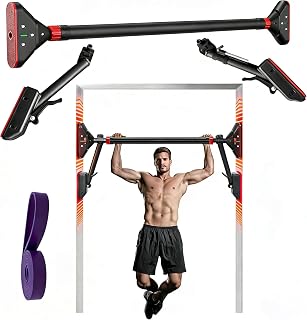
A pull-up bar is one of the most versatile pieces of callisthenics equipment. It can support pull-ups, chin-ups, hanging knee raises, leg raises and a range of grip and scapular-strength exercises. More advanced athletes may also use a suitable bar when progressing towards explosive pulling exercises and muscle-up drills.
There are several configurations to consider. Doorway bars are usually attractive to buyers who need portability and minimal installation, while wall-mounted and ceiling-mounted bars can provide a more permanent training solution. Freestanding structures may be preferable where drilling into walls or ceilings is unsuitable.
Look beyond the headline load rating. The way the bar is mounted, the quality of the mounting hardware, the condition of the installation surface and the distribution of force during dynamic movements can all affect real-world suitability. A product intended for strict pull-ups may not automatically be appropriate for kipping or highly dynamic movements.
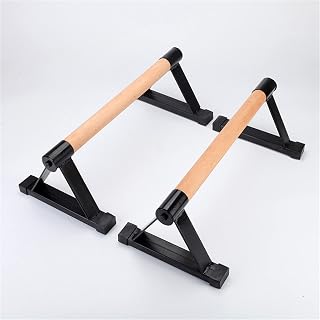
Parallettes are particularly useful for push-up variations, L-sits, handstand practice, planche progressions and other movements where raising the hands from the floor changes wrist position and movement mechanics. Their compact size also makes them one of the easier pieces of equipment to store.
When comparing parallettes, examine the height, base width, handle diameter, grip surface and overall stability. Taller parallettes can provide more clearance for certain movements, while lower versions may feel more suitable for floor-based exercises. A broad base can improve stability, but it can also increase the storage footprint.
Dip stations provide a dedicated platform for parallel-bar dips and can also support knee raises, support holds and certain transition drills. Stability is especially important because the athlete's centre of mass moves above the hands during a dip.
Pay attention to the spacing between the handles and whether the design allows a comfortable hand position. If the equipment includes adjustable handles, verify the available adjustment range rather than assuming that every setting will be suitable for every user.
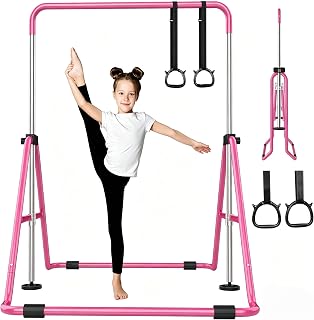
Gymnastic rings are exceptionally versatile because the handles can move independently. They can be used for rows, push-ups, dips, support holds, pull-ups and many advanced strength progressions. The instability can increase the control required compared with fixed bars.
For rings, the quality of the straps and adjustment mechanism is just as important as the rings themselves. Look for clear information about strap length, adjustment, buckle design and attachment requirements. Wooden rings are often valued for their natural grip, while composite and plastic rings can be easier to clean and may be suitable for different environments.
Resistance bands can complement bodyweight training by providing assistance or additional resistance. For beginners, an appropriate band can help make pull-ups and other movements more accessible. Stronger athletes can use bands for additional resistance or targeted accessory exercises.
Band selection should be based on resistance level and intended application rather than colour alone, because colour coding is not universally standardised between manufacturers. Check the manufacturer's stated resistance information and inspect the band regularly for cuts, cracks, thinning or other signs of deterioration.
A weight vest can turn familiar bodyweight movements into progressively loaded exercises. It may be useful for push-ups, squats, lunges, pull-ups and other movements where the additional load can be controlled appropriately.
Fit is critical. A vest that shifts substantially during movement can interfere with technique and become uncomfortable. Compare adjustment options, load distribution, available weight increments and the manufacturer's maximum load. Beginners should not assume that adding weight is automatically the best way to progress a movement.
Beginners generally benefit from equipment that increases accessibility rather than complexity. A resistance band, stable parallettes and a suitable pull-up solution can provide a broad foundation without requiring a large home gym.
Prioritise controlled movement, repeatable technique and gradual progression. Equipment should help you perform an exercise correctly rather than encourage you to attempt an advanced skill before you have developed the necessary strength and control.
Intermediate trainees may need equipment that provides more ways to manipulate leverage, range of motion and resistance. Rings, parallettes, a sturdy pull-up station and adjustable resistance can create a much broader training environment.
At this stage, versatility becomes particularly valuable. A product that supports several useful progressions may justify more space or a higher purchase price than a single-purpose accessory.
Advanced calisthenics training can place substantial demands on equipment. Static skills such as planches, front levers and handstands require stable contact points, while explosive skills can create additional dynamic forces.
Advanced users should therefore examine construction details, attachment systems, rigidity, maximum supported load and the manufacturer's intended use particularly carefully. Do not infer that equipment is appropriate for dynamic training simply because it has a high static weight rating.
Steel is widely used for pull-up bars, dip stations, racks and freestanding structures because it can provide substantial rigidity. The quality of the steel, tube dimensions, welds, fasteners and protective finish all influence the finished product.
For Australian buyers, consider where the equipment will be stored. Outdoor exposure can accelerate corrosion, particularly in humid or coastal environments. A suitable protective finish and sensible maintenance can help, but no coating makes equipment immune to environmental exposure.
Wooden handles and rings are popular because they can provide a comfortable grip and absorb some moisture from the hands. The surface should still be kept clean and inspected regularly for damage, splintering or deterioration.
Plastic and composite components can be useful where low weight, portability and easy cleaning are priorities. However, the material name alone does not establish strength or durability. Evaluate the complete design, attachment points and manufacturer's specifications.
One of the most important buying considerations is understanding what a published load rating actually represents. A stated maximum user weight is not necessarily equivalent to a recommended rating for every movement. Static loading, repetitive loading and dynamic movement can impose different stresses on equipment.
For mounted equipment, the installation surface is another critical variable. A strong bar mounted incorrectly can still be unsafe. Wall type, ceiling construction, fastener selection and installation method should all be considered before purchase.
Always follow the manufacturer's installation instructions and intended-use limitations. If a product requires structural fixing and you are uncertain about the suitability of the mounting surface, professional advice can be preferable to guessing.
Australian conditions can make the indoor-versus-outdoor decision important. Indoor equipment is generally easier to protect from rain, prolonged UV exposure and moisture, while outdoor setups can provide more room and a dedicated training environment.
If equipment is kept outdoors, inspect exposed metal surfaces, fasteners, straps, grips and joints more frequently. UV exposure can affect some polymers and textiles over time, while moisture can contribute to corrosion or material deterioration.
Freestanding equipment should also be placed on a stable, appropriate surface. Uneven ground can affect stability and may change how the structure responds to movement.
Measure the intended training area before ordering equipment. Product dimensions alone do not tell you how much usable space is required. A pull-up station needs overhead clearance, while rings require additional room for movement in multiple directions.
Consider the complete movement envelope rather than only the footprint of the equipment. For example, an apparatus may physically fit inside a room but still be unsuitable if the user's feet, legs or body repeatedly approach walls, furniture, lights or other obstacles.
Grip design can have a surprisingly large effect on training comfort. A handle that is too thick or too thin may change how comfortably you can maintain a secure grip. Surface texture also matters: aggressive knurling may provide traction but can be uncomfortable during high-volume sessions, while a very smooth surface can become difficult to hold with sweaty hands.
For rings and parallettes, consider the relationship between handle diameter and hand size. For fixed bars, look for clear dimensional specifications rather than relying on photographs.
Adjustability can increase the useful life of a product, but only when the adjustment mechanism is practical and stable. Adjustable dip stations, parallettes and resistance systems can accommodate different users and exercises, yet additional moving parts can introduce more points that require inspection.
Before choosing an adjustable product, ask whether you are actually likely to use the different positions. If the equipment will remain at one setting permanently, a simpler fixed design may provide better value.
Portable equipment is especially useful for renters, apartment residents and people who train in multiple locations. Rings, bands, compact parallettes and some doorway pull-up bars can be stored relatively easily compared with full-size stations.
However, portability should not be confused with suitability for every exercise. A lightweight product can be convenient while still requiring careful setup and controlled use. If equipment is repeatedly assembled and disassembled, inspect attachment points and locking mechanisms regularly.
Brand recognition can help narrow a large product category, but it should not replace specification checking. Different brands specialise in different equipment categories, and product quality can vary between individual models.
The safest approach is to compare the specific model rather than assuming every product from a familiar brand has the same construction, warranty terms, load capacity or intended use.
A ranked list is most useful when the products are evaluated against consistent criteria. When reviewing the leading options for Australia, consider the following categories rather than relying solely on star ratings.
The cheapest product is not necessarily the best-value option. A product can provide strong value when it performs its intended job reliably, remains useful as training progresses and does not require unnecessary replacement or additional accessories.
For example, a beginner may get more practical value from a versatile pair of parallettes and a suitable resistance-band system than from an expensive multi-station setup. Conversely, someone training advanced pulling and dipping skills several times each week may place greater value on a permanently installed, rigid structure.
Think in terms of cost per useful training function. If one product safely supports several movements you already perform, its value may be greater than that of several inexpensive single-purpose accessories.
Customer ratings can provide useful clues, but ratings rarely explain whether a product is appropriate for a particular training level. Read reviews for recurring comments about stability, installation, dimensions, grip, durability and ease of use.
Photographs can make equipment look smaller or larger than it really is. Always compare the listed dimensions with your own available space.
Static capacity and dynamic exercise are not interchangeable. A high published user-weight limit should not be interpreted as permission to perform every type of movement on the equipment.
Advanced equipment can be appealing, but buying around an aspirational skill can result in unused gear. Select equipment that supports your current programme while providing a realistic progression path.
Wall-mounted and ceiling-mounted products require more planning than portable equipment. Confirm the mounting surface and hardware requirements before purchasing.
Straps, buckles, bolts, welds, grips and protective coatings should not be treated as maintenance-free. Regular visual inspection is particularly important for equipment used frequently or exposed to outdoor conditions.
Customer reviews are most useful when you extract specific information rather than simply counting positive and negative ratings. Look for repeated comments from people using the equipment in a similar environment and for a similar purpose.
Useful review signals include comments about assembly clarity, actual dimensions, stability, grip comfort, noise, storage, adjustment mechanisms and long-term wear. A review saying that a product is “great” provides little technical information, whereas a review describing how the product behaves during a particular movement can help with comparison.
Also distinguish product faults from setup problems. A complaint about instability may be important, but it is worth determining whether reviewers describe correct assembly and appropriate installation before drawing conclusions.
A useful home setup does not need to contain every type of equipment. Start with the movement patterns you want to train and add equipment only when it solves a specific limitation.
A minimal setup can centre around a suitable pull-up solution, resistance bands and parallettes. This combination can support pulling, pushing, assistance work, core exercises and a variety of progressions while requiring relatively little storage space.
An intermediate setup can add gymnastic rings and a dedicated dip solution. This increases exercise variety and allows greater experimentation with instability and body position.
An advanced setup may include a robust pull-up structure, parallel bars, rings, parallettes, resistance equipment and optional external loading. At this level, quality installation and adequate clearance become increasingly important because more dynamic and demanding skills may be introduced.
Limited space does not prevent effective callisthenics training. Compact equipment can often provide a surprisingly broad range of exercises.
A garage can provide considerably more flexibility, especially for permanent equipment. However, temperature changes, dust and humidity can influence equipment maintenance. Metal structures should be inspected for corrosion, while straps and other textile components should be kept away from prolonged moisture.
Garage users should also consider ceiling height, vehicle access, concrete floors and whether the equipment needs to be moved when the space is used for another purpose.
Outdoor training introduces environmental considerations that do not apply to an indoor home gym. UV exposure, rain, humidity, dust and temperature changes can affect materials and finishes.
If equipment is designed for outdoor use, follow the manufacturer's storage and maintenance recommendations. Do not assume that an indoor product can safely be left outside simply because it is made from metal.
Regular inspection can help identify problems before equipment is used under load. The exact maintenance routine depends on the product, but the following checks are useful starting points:
Fixed equipment generally makes sense when you have a dedicated training area and know which movements you perform regularly. Portable equipment is more suitable when the room serves multiple purposes or when you need to move your setup frequently.
There is no universal winner. A renter with limited floor space may benefit greatly from compact equipment, while a homeowner with a dedicated garage gym may prefer permanent installations.
Prioritise a stable pull-up solution and consider resistance bands for assisted repetitions. Once strict pull-ups become easier, additional training options can include variations in grip and controlled external loading where appropriate.
A stable dip station or suitable parallel bars can provide a dedicated environment for dips. The spacing and height should allow comfortable positioning and sufficient clearance.
Parallettes can be particularly useful because they provide hand clearance from the floor and allow the legs to move beneath the hands. Adjustable or different-height options can be compared according to flexibility, body proportions and training preference.
Handstand training requires adequate open space and a surface appropriate for the user's training approach. Parallettes can alter wrist position, but they do not eliminate the need for safe practice conditions and controlled progression.
These skills place substantial demands on the shoulders, arms, trunk and grip. Equipment should be selected for stability and intended use rather than simply because it appears suitable for advanced skills in promotional photographs.
Bodyweight training can still generate substantial forces. Equipment should be used only within its stated purpose and according to the manufacturer's instructions. Before each session, make sure portable equipment is positioned correctly and mounted equipment remains secure.
Maintain adequate space around the training area and remove objects that could cause injury during a loss of balance. Dynamic skills should not be attempted on equipment unless the product is specifically intended for that type of use.
For wall- or ceiling-mounted equipment, installation quality is part of the overall safety equation. If you cannot confidently identify an appropriate structural fixing method, obtain suitable professional assistance rather than relying on trial and error.
Price comparisons should be performed using equivalent specifications. A basic pull-up bar and a heavy-duty freestanding station are not direct substitutes, even if they appear under the same search category.
When checking current Australian prices, compare the exact model, included accessories, mounting hardware, dimensions and stated capacity. Retailer promotions can change, so the price shown at one point in time should not be treated as a permanent market price.
For Amazon Australia purchases, compare the actual product listing carefully, including the seller information, model number and current specification details. Where multiple sellers offer apparently identical products, verify that the product description and model identifiers genuinely match.
There is no single best product for every beginner. A suitable pull-up solution, resistance bands and stable parallettes can provide a broad foundation without requiring a large collection of equipment. The best choice depends on the movements you want to learn, available space and budget.
A pull-up bar can support many important exercises, particularly pulling and hanging movements, but it does not provide the same functionality as rings, parallettes or parallel bars. If your programme includes dips, L-sits, handstand variations or ring exercises, additional equipment may be useful.
Yes, rings can be highly versatile for home bodyweight training when they can be securely attached and used with adequate clearance. Their instability can make exercises more demanding, so users should progress gradually and follow the manufacturer's guidance.
Either can be appropriate. Compare grip feel, dimensions, stability, construction quality, maintenance requirements and intended use rather than selecting solely by material. The complete design matters more than the material name alone.
The appropriate resistance depends on the exercise and your current ability. For assisted pull-ups, the band should provide enough assistance to support controlled repetitions without eliminating the need for active movement. Because colour systems differ between manufacturers, use the manufacturer's stated resistance information rather than colour alone.
Only when the product is suitable for the intended environment. Check the manufacturer's instructions regarding outdoor use, weather exposure and storage. Equipment exposed to Australian sunlight, rain and humidity may require more frequent inspection and maintenance.
You can start with very little. A suitable pull-up solution, bands and compact parallettes can cover many fundamental exercises. Add rings, dip equipment or external loading only when they solve a genuine training requirement.
No. Higher-priced equipment may offer heavier construction, better adjustment systems or more versatility, but those features are valuable only if they match your needs. Compare construction, stability, dimensions, intended use and durability rather than price alone.
Check the manufacturer's installation instructions, required mounting hardware, structural requirements and clearance dimensions. The suitability of the wall and fixing method is essential. Do not rely solely on the published weight rating of the bar.
Inspection frequency depends on the product, frequency of use and environment. Frequently used equipment and equipment kept outdoors generally deserves more frequent checks. Inspect before use if you notice unusual movement, damage or wear.
The strongest callisthenics equipment purchase is one that fits your training objectives, physical space and progression plan. Instead of selecting a product because it appears prominently in a list or has a high average rating, compare the details that affect actual use: dimensions, stability, materials, load capacity, grip, adjustability, installation requirements and maintenance.
For beginners, versatility and simplicity are often more useful than an oversized collection of specialist equipment. Intermediate and advanced athletes can justify more specialised equipment when it directly supports their progression. In every case, the intended movement should determine the equipment choice.
Before making a purchase in Australia, check the latest product specifications, current customer feedback, retailer information and today's price. Product listings can change during 2026, so confirm the exact model and included components immediately before ordering.
Callisthenics equipment changes as manufacturers introduce new models, specifications and configurations. Retailer listings can also change independently of the underlying product. For that reason, a responsible buying guide should be treated as a decision-making resource rather than a substitute for checking the current product listing.
Before purchasing, verify the latest specifications from the manufacturer or retailer, compare independent customer feedback where available, and make sure the equipment is appropriate for your intended exercises and training environment in Australia.