

♥ Wishlist
Compare 43 verified Home Entertainment Furniture for Australian Homes products in Australia. Reviews, ratings, pros, cons and buying advice updated for October 2026.


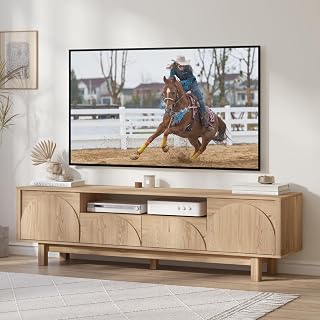


Choosing home entertainment furniture is about much more than finding a cabinet that fits beneath a television. The right unit needs to accommodate your TV and connected equipment, manage cables, provide useful storage, suit the dimensions of the room and remain practical as your entertainment setup changes. In Australian homes, factors such as room size, ventilation, flooring, wall construction, humidity, household traffic and the dimensions of commonly available televisions can all influence the best choice.
This buying guide is designed to help Australian shoppers compare entertainment units, TV cabinets, media consoles, entertainment centres, floating TV units and related furniture by looking beyond appearance. When comparing products, consider construction quality, dimensions, weight capacity, ventilation, cable management, storage configuration, assembly requirements and long-term practicality rather than relying on appearance or star ratings alone.
The best entertainment furniture is the one that fits your actual equipment and room rather than simply looking attractive in a product photograph. Start by measuring the television, available floor or wall space and every component that needs to be stored. Then assess how the furniture will be used on a daily basis.
Television size is normally described by diagonal screen measurement, but that measurement does not tell you the complete width or depth of the television. Bezel thickness, stand configuration and the position of the feet can vary substantially between models.
A cabinet that is technically wide enough for a television may still be inconvenient if its shelves are too shallow or its top surface leaves insufficient room around the television stand.
Load capacity deserves particular attention when a television is placed on a cabinet. The relevant figure is the furniture manufacturer's stated capacity for the top surface, not simply the weight of the cabinet itself. The load should also be distributed as intended by the manufacturer.
Do not assume that a large entertainment unit can safely support every large television. Compare the television's weight, stand footprint and mounting arrangement with the furniture specifications before purchase. If the product documentation does not clearly state an appropriate load rating, additional caution is warranted.
Different entertainment furniture designs solve different problems. A traditional TV stand may suit a straightforward television and soundbar arrangement, while a larger entertainment centre can provide substantially more storage.
Think about what you actually need to store before selecting a cabinet. A television may be only one component of the setup. Streaming devices, gaming consoles, controllers, remote controls, Blu-ray players, speakers, headphones, cables and accessories can quickly occupy several shelves.
Adjustable shelving is particularly useful because electronic components are not uniform in height. A fixed shelf that accommodates one device may leave wasted vertical space elsewhere. Drawers can be useful for controllers and small accessories, while enclosed cupboards can conceal less attractive equipment and household items.
Effective cable management can make a major difference to both appearance and usability. Look for rear openings, cable cut-outs, routing channels or appropriately positioned access holes.
Good cable management should make equipment easier to install and service rather than simply hiding wires from view.
Heat management is one of the most frequently overlooked considerations when buying entertainment furniture. AV receivers, gaming consoles, amplifiers, media servers and other electronics can generate significant heat during operation.
An enclosed cabinet is not automatically unsuitable, but its ventilation arrangements should be compatible with the equipment being installed. Check the equipment manufacturer's clearance requirements and avoid blocking ventilation openings. Open-backed or ventilated compartments can be advantageous for equipment that requires continuous airflow.
If you use a soundbar, measure both its width and height. A low cabinet can sometimes place the television at an attractive viewing height while leaving insufficient clearance for a soundbar in front of the screen.
Also consider whether the furniture's front edge, shelves or doors could interfere with upward-firing or front-facing speakers. If a soundbar uses Dolby Atmos or another technology that relies on reflected sound, furniture placement can influence performance, so the manufacturer's installation recommendations should be considered.
Closed doors create a cleaner appearance, but they can introduce practical complications. Some infrared remote controls require a reasonably clear path to the equipment's receiver. If a device is kept behind a solid door, remote operation may become less convenient unless the equipment supports another control method.
Glass or open-front compartments can provide a compromise between visual concealment and remote-control accessibility. Check hinge construction, door clearance and drawer travel before choosing a configuration for a compact room.
Solid wood can provide a substantial appearance and may develop character over time. Different species have different hardness, grain and colour characteristics, so “solid wood” alone does not tell you everything about durability.
Wood can also respond to changes in temperature and humidity. Keep furniture away from prolonged moisture exposure, excessive heat and unsuitable cleaning products, and follow the manufacturer's care instructions.
Medium-density fibreboard and other engineered wood products are widely used in contemporary entertainment furniture. They can provide smooth surfaces and consistent dimensions, while laminate, veneer or painted finishes allow manufacturers to produce a wide variety of styles.
The important comparison points include board thickness, edge finishing, surface treatment, joinery, back-panel construction and the quality of the hardware. A product photograph rarely provides enough information to assess these factors, so specifications and assembly documentation are worth examining.
Particleboard can be an economical choice, particularly for budget furniture. Quality varies depending on density, thickness, finish and construction. Particular attention should be paid to how shelves are supported and how screw joints are designed.
For furniture that will be moved frequently or heavily loaded, examine construction details rather than judging quality solely from the exterior finish.
Metal frames can provide a modern appearance and useful structural support, while glass shelves can make a cabinet appear visually lighter. However, glass introduces additional considerations around thickness, supported weight, edge protection and cleaning.
If children or pets regularly use the room, consider whether sharp corners, accessible glass surfaces or unstable configurations present practical concerns.
Open shelving provides straightforward access and usually makes ventilation easier. It is particularly convenient for gaming consoles and equipment that is frequently connected or disconnected.
Closed cabinets are better suited to shoppers who prioritise visual simplicity and concealed storage. They can reduce the visibility of cables and accessories, but ventilation and remote-control access become more important.
Floating TV consoles can create a clean contemporary appearance and make floor cleaning easier. However, wall-mounted furniture requires more careful installation than a freestanding unit.
Before choosing a floating design, identify the wall construction and determine whether the manufacturer's mounting hardware and installation method are appropriate. Australian homes can use different wall systems, including plasterboard-lined walls, masonry and other construction methods, so mounting requirements should never be assumed.
Pay attention to the combined weight of the cabinet and its contents. Wall furniture should be installed according to the manufacturer's instructions using suitable fixings for the actual wall structure.
Gaming equipment can place different demands on furniture compared with a simple television setup. Modern consoles can be relatively large, accessories can accumulate quickly and ventilation can be important during long gaming sessions.
Brands such as PlayStation, Xbox and Nintendo have different hardware dimensions and ventilation requirements, so furniture should be selected around the specific console generation rather than around the generic term “gaming setup.”
Audio equipment introduces additional spacing and ventilation requirements. AV receivers and amplifiers can require considerable airflow, while speakers may need unobstructed placement to perform as intended.
Do not treat an entertainment cabinet as a generic storage box for high-powered audio equipment. Check the audio manufacturer's recommended clearances and installation requirements before placing equipment inside an enclosed compartment.
For a soundbar system, compare the furniture width, soundbar dimensions and television position. For a traditional stereo or home-theatre system, also consider speaker placement, cable routing and whether equipment access will remain convenient after installation.
Minimalist entertainment furniture typically uses clean lines, restrained hardware and limited visual detailing. White, black, neutral and natural finishes can work across a range of interiors, but the most suitable colour depends on existing flooring, walls and other furniture.
Scandinavian-style cabinets often combine lighter finishes, simple geometry and tapered or raised legs. The open space beneath the cabinet can make a smaller room feel less visually crowded.
Industrial designs commonly combine metal frames with timber-look or darker panels. This style can work well in media rooms with exposed or contemporary finishes, although metal surfaces may show dust and fingerprints depending on the finish.
Traditional entertainment furniture can provide more substantial visual weight and enclosed storage. It may be appropriate where the television is intended to integrate with existing timber furniture rather than become a minimalist focal point.
When comparing two or more products, create a simple specification checklist rather than relying on product photography. The following criteria provide a useful framework for Australian shoppers.
Customer ratings can be useful, but the average score should not be the only factor in a purchasing decision. Read reviews for recurring observations about assembly, dimensions, stability, finish quality, missing components, damaged packaging and long-term usability.
Give greater weight to reviews that explain how the furniture was used and what equipment it accommodated. A review from someone using a small television provides limited evidence about whether a cabinet will suit a large television, AV receiver and multiple consoles.
When reading reviews for products sold through Amazon Australia or other retailers, distinguish between comments about the product itself and comments about delivery, packaging or an individual transaction. These are relevant experiences, but they do not necessarily describe the furniture's construction or performance.
Storage requirements should be based on current equipment plus reasonable future flexibility. A cabinet that fits one streaming device today may become restrictive after adding a game console, soundbar, media player, smart-home hub or external storage.
For a simple television setup, one or two accessible compartments may be sufficient. A gaming or home-theatre system can benefit from multiple shelves, wider compartments and dedicated cable access.
Avoid filling every compartment immediately. Leaving some usable space makes equipment upgrades and cable management considerably easier.
Compact rooms benefit from furniture that uses vertical or wall space efficiently without overwhelming the room. A low-profile console can visually reduce the furniture footprint, while a floating unit can preserve visible floor area.
Corner furniture can be useful where the room layout naturally directs the television toward a corner. However, corner designs should be measured carefully because the apparent width can differ from the usable front-facing space.
For apartments and smaller homes, also consider how the furniture will enter the property. Measure doorways, staircases, lifts and narrow corridors when buying a large assembled entertainment centre.
Television furniture should be stable and appropriate for the television and equipment placed on it. Follow the furniture manufacturer's assembly instructions carefully and use any supplied anti-tip or wall-anchoring hardware as instructed.
Where applicable, television manufacturers also provide guidance for securing televisions. This is particularly important in households with young children or pets.
Keep heavy equipment positioned according to the furniture manufacturer's instructions and avoid placing objects where they could easily fall or make the unit unstable.
Good maintenance begins with following the care instructions supplied with the furniture. Different finishes can react differently to moisture, abrasive cleaners, solvents and heat.
Before choosing a product, write down every device that will sit on or inside the furniture. A useful inventory can include the television, soundbar, game consoles, streaming devices, Blu-ray player, AV receiver, amplifier, set-top box, router, smart-home equipment and accessories.
Then identify which components generate heat, which require remote-control access and which need frequent cable connections. This makes it easier to decide between open shelves, enclosed cupboards and mixed configurations.
Australian shoppers may encounter entertainment furniture from a wide range of manufacturers and retailers, including IKEA, Freedom, Fantastic Furniture, Temple & Webster, Artiss and vidaXL, alongside furniture sold through Amazon Australia and independent retailers. Availability, specifications and individual models can change, so compare the exact product listing rather than assuming that every item from a brand has the same construction or capacity.
For televisions and associated equipment, brands such as Samsung, LG, Sony, Hisense, TCL, PlayStation, Xbox and Nintendo can have different dimensions and installation requirements. The furniture should be matched to the specific equipment model wherever possible.
A higher purchase price does not automatically guarantee that an entertainment cabinet is the best choice. The useful question is whether additional construction quality, storage flexibility, finish durability or design features justify the difference for your circumstances.
Budget furniture can be suitable for straightforward setups when the dimensions, load capacity and construction meet your requirements. More expensive furniture may be worthwhile when you need larger compartments, stronger construction, specialised cable management, premium finishes or a design that integrates with the rest of the room.
Compare the specifications of products at different price points before deciding. A lower-priced product with the right dimensions and adequate capacity can be a better fit than a more expensive cabinet that lacks suitable ventilation or equipment space.
There is no single best type for every living room. A suitable choice depends on television size, room dimensions, equipment, storage requirements, style and whether you prefer freestanding or wall-mounted furniture. Measure the available space and equipment first, then compare cabinets that meet those requirements.
The cabinet should be compatible with the television's actual width and the manufacturer's load guidance. Many shoppers prefer a cabinet that extends beyond the television visually, but the appropriate width ultimately depends on the room, design and equipment layout.
Neither is universally better. Floating units can create a cleaner appearance and leave floor space unobstructed, while freestanding cabinets are generally easier to reposition and do not require wall mounting. Wall construction and installation requirements are especially important for floating designs.
A back panel can improve the finished appearance and provide additional structural support, but completely enclosed construction may restrict airflow and cable access. For electronic equipment that generates heat, look for ventilation and cable-routing provisions compatible with the equipment manufacturer's requirements.
There is no universally best material. Solid wood can offer a substantial natural appearance, while MDF and other engineered materials can provide consistent surfaces and a wide choice of finishes. Construction quality, thickness, joinery, load capacity and finish are often more useful comparison points than material category alone.
Choose furniture with rear cable cut-outs or dedicated cable-routing features, position equipment close to its required connections and keep power and signal cables organised. Leave enough slack for servicing without creating large loops that become difficult to manage.
It depends on the soundbar and cabinet design. The soundbar should have the clearance required by its manufacturer, and its speakers should not be obstructed by shelves, doors or panels. Soundbars that use upward-firing speakers require particular attention to clearance above the unit.
Prioritise adequate internal dimensions, ventilation, load capacity, cable access and convenient controller storage. Check the specific console manufacturer's ventilation guidance and compare it with the furniture compartment dimensions before purchase.
They can be suitable when the cabinet provides sufficient ventilation for the installed equipment and the equipment manufacturer permits the configuration. Heat-producing electronics should not be placed in an unsuitable enclosed compartment merely to achieve a tidier appearance.
Compare the television's weight and stand footprint with the furniture manufacturer's stated top-surface load capacity and installation instructions. If the required information is unavailable, choose a product with clearer specifications rather than guessing.
No. Ratings provide useful consumer feedback but should be combined with dimensions, materials, construction details, load capacity, ventilation, storage and assembly information. Reviews are most useful when they describe the reviewer's actual setup and long-term use.
A useful independent buying guide should not treat the highest rating or lowest price as an automatic winner. The most appropriate entertainment furniture depends on the equipment, room and priorities of the individual buyer.
When comparing products for an Australian home, give particular attention to dimensions, construction, load capacity, ventilation, storage, cable management, assembly and installation. Consider customer feedback as supporting evidence rather than a substitute for specifications. Product models, prices, retailer policies and availability can change, so verify the current listing and specifications before making a purchase.
The strongest choice is ultimately the unit that accommodates the equipment safely, fits the available space, supports the desired storage system and remains practical to use as the entertainment setup evolves.