

♥ Wishlist
Compare 51 verified Digital Cameras & DSLR Cameras products in Australia. Reviews, ratings, pros, cons and buying advice updated for October 2026.


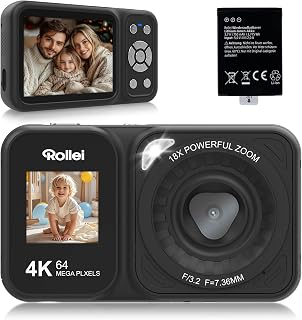

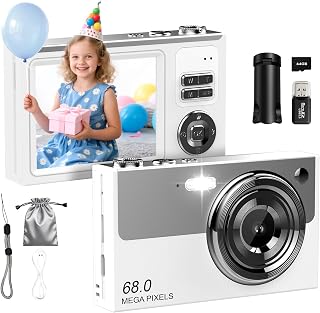


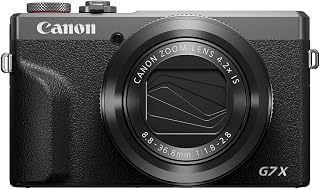


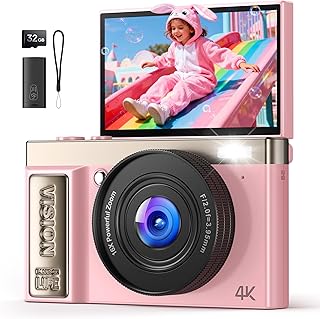


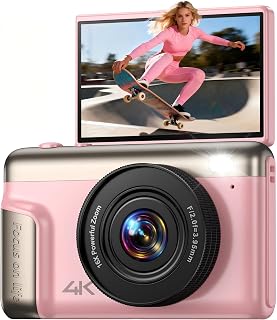


Choosing a digital camera in Australia is no longer simply a matter of deciding between a DSLR and a compact camera. The market now includes full-frame and APS-C mirrorless cameras, traditional DSLRs, fixed-lens premium compacts, bridge cameras and highly capable entry-level models. For buyers comparing the best digital cameras and DSLR products, the right choice depends on how the camera will be used, what lenses or accessories are required, how much equipment you are prepared to carry, and which specifications genuinely matter for your photography.
This guide is designed for Australian shoppers researching cameras before making a purchase. Rather than treating megapixel count or brand recognition as the only deciding factors, compare the complete system: sensor format, autofocus, image stabilisation, burst performance, video capabilities, lens compatibility, battery life, ergonomics, storage, connectivity and long-term upgrade potential.
Camera specifications can also vary between models sold in different markets, and bundles may contain different lenses or accessories. Before buying, check the exact model number, included lens, Australian retailer information, warranty terms and current specifications. Product availability and pricing can change, so use current retailer listings and verified customer reviews when making the final comparison.
A useful camera comparison should go beyond a list of headline specifications. Two cameras with similar sensor resolutions can provide very different shooting experiences because autofocus systems, processors, stabilisation, viewfinders, controls and lens ecosystems can differ substantially.
When assessing cameras for Australian buyers, consider these areas together:
The DSLR versus mirrorless decision remains relevant, but it is no longer as simple as saying one category is universally superior. Modern mirrorless cameras offer advantages in size, electronic viewfinders, autofocus technology, video integration and real-time exposure previews. DSLRs can still appeal to photographers who prefer optical viewfinders, established ergonomics, long battery life or access to an extensive second-hand lens market.
For a new buyer building a system from scratch in 2026, mirrorless deserves serious consideration because most major camera manufacturers are concentrating new development in mirrorless systems. However, that does not automatically make every mirrorless camera a better purchase than every DSLR. A well-matched DSLR can still be a sensible choice for particular photographers and budgets.
Sensor format is one of the most important technical differences between cameras. Sensor size affects field of view, lens selection, depth of field, low-light performance and the physical size of the camera system.
Full-frame cameras use a sensor approximately the same size as a 35mm film frame. They are popular among professional photographers and enthusiasts who want strong low-light capability, broad dynamic range and greater control over depth of field. Full-frame systems can, however, become expensive and heavy once high-quality lenses are included.
A full-frame camera is particularly attractive for portraiture, weddings, commercial work, landscape photography and other applications where image quality and lens selection are priorities. The body should not be evaluated independently from the lenses you expect to use.
APS-C cameras occupy an important middle ground. They can provide excellent image quality while allowing smaller and lighter camera bodies and lenses than many full-frame systems. The smaller sensor also provides a crop factor that can be useful for wildlife and sports photography because compatible telephoto lenses provide a narrower field of view.
For many enthusiasts, travellers and first-time interchangeable-lens buyers, APS-C offers a particularly practical balance between cost, portability and performance.
Smaller sensors can still be useful when compact dimensions, long built-in zoom ranges or lower equipment costs are more important than maximum image quality. Bridge cameras, travel cameras and premium compact cameras can be convenient alternatives to interchangeable-lens systems.
The key is to buy according to the intended use. A compact camera that you actually carry everywhere may produce more useful photographs than a technically superior camera that remains at home because its body and lenses are inconvenient to transport.
Megapixel count describes image resolution, but it should not be used as a simple ranking system. A camera with a higher pixel count is not automatically better for every photographer.
Higher resolution can be useful when you regularly crop images, create large prints, photograph highly detailed subjects or need flexibility for commercial post-production. It can also generate larger files, which affects memory-card capacity, computer storage and editing workflow.
For everyday travel, family photography and social media, a moderate-resolution modern camera can already provide considerably more detail than most users require. Prioritise sensor performance, autofocus, lens quality and handling before paying a premium solely for additional megapixels.
Autofocus technology has become a major differentiator between camera models. A camera may have excellent image quality but still be frustrating for fast-moving subjects if its autofocus tracking is poorly suited to your photography.
For portraits and family photography, reliable face and eye detection can reduce the amount of manual focus adjustment required. Wildlife and sports photographers should pay more attention to tracking, subject recognition and continuous autofocus performance. Landscape photographers may place less emphasis on tracking and more on manual focusing, dynamic range and lens quality.
Image stabilisation helps reduce the effect of camera movement during handheld shooting. Depending on the system, stabilisation may be built into the camera body, the lens, or both.
In-body image stabilisation can be particularly valuable when using prime lenses or other lenses without optical stabilisation. Optical image stabilisation in a lens can also be useful, especially with long telephoto lenses. Some systems coordinate body and lens stabilisation to improve overall performance.
Stabilisation does not freeze a moving subject. If a person, animal or vehicle is moving quickly, a sufficiently fast shutter speed may still be necessary even when the camera has sophisticated stabilisation.
One of the most common buying mistakes is spending almost the entire budget on a camera body and then using an unsuitable or poor-quality lens. The lens determines focal length, maximum aperture, perspective, background separation and a significant part of the optical character of the image.
Before buying a camera, examine the complete lens roadmap for its mount. Sony, Canon, Nikon, Fujifilm, Panasonic, OM System and other manufacturers offer different combinations of camera bodies and lenses, while third-party manufacturers can expand choices for selected mounts.
A camera's technical capabilities are only useful if you understand the three fundamental exposure controls.
Aperture controls how much light enters the lens and influences depth of field. A wider aperture, represented by a smaller f-number such as f/1.8, can help in low light and create stronger background separation. A narrower aperture can provide greater depth of field when photographing landscapes, architecture or groups.
Shutter speed determines how long the sensor is exposed to light. Fast shutter speeds can freeze action, while slower speeds can intentionally record motion or create blur. Camera stabilisation can make slow handheld shutter speeds more practical, but it does not eliminate movement from the subject itself.
ISO affects the sensor's sensitivity to the selected exposure. Raising ISO can make it possible to use faster shutter speeds or smaller apertures in darker conditions, but higher ISO settings generally introduce more visible image noise and can reduce fine detail.
A good camera buying decision should therefore consider the interaction between aperture, shutter speed and ISO rather than treating any one specification in isolation.
JPEG files are processed inside the camera and are convenient for sharing, storing and viewing. RAW files retain substantially more original image information and provide greater flexibility during editing, particularly for exposure, white balance, highlights and shadows.
RAW is usually more appropriate for photographers who intend to edit images in software such as Adobe Lightroom or other compatible applications. JPEG can be preferable for fast workflows where images need to be transferred and shared immediately.
Many cameras can capture RAW and JPEG simultaneously. This can be useful when you want a ready-to-share JPEG while retaining the RAW file for later editing.
Many buyers now expect a stills camera to perform well for video. If video is part of your workflow, compare more than the headline recording resolution.
A camera designed primarily for photography may still produce excellent video, but a dedicated hybrid model can provide controls and recording features that make filmmaking considerably easier.
Construction quality matters when a camera is used frequently outdoors. Magnesium-alloy sections, reinforced components and weather sealing can contribute to durability, but the exact construction varies by model.
Weather resistance should never be interpreted as permission to expose a camera deliberately to heavy rain, dust, sand or water. Even weather-sealed equipment depends on compatible lenses and correctly closed doors and covers. If you regularly photograph outdoors, also budget for practical protection such as a suitable camera bag, rain cover and lens protection.
The electronic viewfinder is one of the defining features of a modern mirrorless camera. When comparing models, consider resolution, refresh behaviour, magnification, brightness and the amount of shooting information that can be displayed.
A fully articulated screen can be useful for video, low-angle photography and self-recording. A tilting screen may be preferable for photographers who want quick framing while keeping the camera close to the body.
Touchscreens can make menu navigation and focus-point selection faster, although photographers who rely heavily on physical controls may prefer a camera with dedicated buttons and dials.
Battery life is an important practical consideration for travel, weddings, events and outdoor photography. Check the manufacturer's stated battery information, but remember that real-world endurance depends on factors such as screen use, electronic viewfinder brightness, autofocus, burst shooting, video recording and wireless connectivity.
Memory-card requirements should also be checked before purchase. High-resolution RAW photographs and high-quality video can consume storage quickly. If a camera supports multiple card slots, the additional flexibility can be valuable for backup, overflow storage or separating different file types.
Wi-Fi and Bluetooth can simplify transfers to smartphones and other devices. USB connectivity may also support charging, file transfer or tethered workflows depending on the camera.
Travel photographers generally benefit from a compact body, versatile zoom lens, reliable autofocus, good battery endurance and strong image stabilisation. Weight becomes especially important when the camera is carried through airports, cities, hiking trails and day-long sightseeing trips.
Do not automatically select the highest-end full-frame model. A smaller APS-C or Micro Four Thirds system can be more practical if portability is a major priority.
Wildlife photographers should prioritise autofocus tracking, subject recognition, burst performance, telephoto lens availability and ergonomics. Reach is particularly important because animals may be too distant for standard lenses.
APS-C systems can be attractive for wildlife because the crop factor can provide a narrower field of view with compatible lenses. Full-frame systems can provide excellent low-light performance and image quality, but suitable long lenses can add substantial weight and cost.
Sports photography benefits from fast autofocus, responsive controls, high continuous shooting performance, sufficient buffer capacity and dependable handling. The ability to maintain focus on a moving subject is often more valuable than simply having the highest possible megapixel count.
Portrait photographers should examine eye-detection autofocus, lens selection, aperture options and skin-tone rendering. A fast prime lens can be a strong addition to an interchangeable-lens camera, particularly when background separation and low-light performance are priorities.
Landscape photographers should consider dynamic range, resolution, weather resistance, lens selection, tripod compatibility and battery performance. A wide-angle lens is often more important to the final result than moving from one camera body to another with only a modest difference in sensor resolution.
For families, simplicity and reliability can be more important than advanced professional features. Look for straightforward controls, dependable autofocus, a versatile lens and good automatic modes. A camera that is quick to turn on and easy to carry is more likely to be used regularly.
Content creators should compare screen articulation, video autofocus, microphone connectivity, stabilisation, recording limits, battery charging and file-transfer options. A camera that can be configured quickly for both horizontal and vertical content may be more useful than one designed solely for conventional photography.
Brand selection can influence the entire ownership experience because each manufacturer uses different lens mounts, menus, accessories and system strategies. Established names such as Canon, Sony, Nikon, Fujifilm, Panasonic, OM System and Leica cover different segments of the market.
Canon's EOS ecosystem includes both DSLR and mirrorless history, with the EOS R system forming an important part of its current interchangeable-lens strategy. Sony's Alpha range is known for a broad mirrorless lineup spanning compact APS-C models and full-frame cameras. Nikon's Z system covers APS-C and full-frame mirrorless cameras, while Nikon also has a substantial DSLR legacy.
Fujifilm is particularly relevant to buyers interested in APS-C and medium-format mirrorless photography, with a strong emphasis on lens choice and in-camera colour profiles. Panasonic offers mirrorless cameras across different formats and has a strong history in video-oriented hybrid cameras. OM System is relevant to photographers who value compact interchangeable-lens equipment and long telephoto reach.
Leica occupies a different position, with products aimed at buyers who place substantial emphasis on design, optical quality and the overall photographic experience. Its products should be compared on the basis of the buyer's priorities rather than simply against entry-level mainstream cameras.
A previous-generation camera can remain highly capable even after a successor is introduced. Camera technology does not become unusable simply because a newer model exists.
Older models can be worth considering when they provide the required image quality, autofocus performance and connectivity at a lower overall system cost. However, compare the complete package rather than only the body price. A camera with an older lens mount, limited battery options or discontinued accessories may have different long-term implications.
When comparing generations, identify what actually changed. Improvements may include autofocus algorithms, processor speed, video modes, stabilisation, viewfinder quality, screen design, card interfaces or wireless functionality. If the newer features do not matter for your photography, the older model may provide better value.
Resolution is useful, but it does not determine the complete image quality or shooting experience. Sensor performance, lens quality and autofocus can have a much greater practical effect.
The initial camera body purchase is only the beginning of an interchangeable-lens system. Telephoto, wide-angle, macro and fast-aperture lenses can substantially increase the total cost.
High-end cameras can offer impressive specifications, but professional features can also add cost, weight and complexity. For casual users, a simpler model may be easier to carry and operate.
Always consider the dimensions and weight of the complete camera-and-lens combination. A small body paired with a large telephoto lens is still a substantial setup.
Menu design and controls are subjective, but they matter. If possible, examine the button layout, grip and control dials before buying.
Weather-resistant equipment still needs sensible protection. Check the manufacturer's specific guidance for the body and lens combination rather than assuming that sealing makes equipment safe around water.
Camera kits can include different lenses, batteries, chargers, straps and other accessories. Confirm precisely what is included in the listing and compare like-for-like packages.
Instead of setting a body-only budget, calculate the cost of the complete system you expect to use during the first year. Include the camera body, primary lens, memory cards, spare battery if needed, camera bag and any essential protection.
A sensible approach is to allocate enough money for a good everyday lens rather than maximising the body specification. For many photographers, a well-chosen lens will remain useful through several camera upgrades.
Buyers should also decide whether accessories are genuinely necessary. A tripod may be essential for some landscape or long-exposure workflows but unnecessary for casual street photography. Similarly, a premium memory card may be worthwhile for high-bitrate video or demanding burst shooting but excessive for basic JPEG photography.
Camera specification sheets are useful, but individual numbers can be misleading without context. A high maximum burst rate may only be available under specific settings, with electronic shutter operation, a particular file format or a limited number of frames. Similarly, a maximum video resolution does not tell you how long that mode can be recorded, what crop is applied or what autofocus functions remain available.
Look for the conditions attached to important specifications. Check whether burst speed depends on autofocus settings, whether stabilisation performance varies with the lens, whether particular video modes require specific memory cards, and whether wireless features depend on a smartphone application.
The most useful comparison is therefore not simply “which camera has the highest specification?” but “which camera provides the features I need under the conditions in which I will actually use it?”
Accessories should support your photography rather than become unnecessary expenses. A few carefully selected items can make a camera system substantially easier to use.
Regular care can help keep camera equipment functioning reliably. Keep the camera and lenses in a clean, dry environment when they are not being used, and use a suitable bag when transporting them.
Avoid touching the sensor or attempting aggressive sensor cleaning without understanding the manufacturer's recommended procedure. Dust on the sensor can become visible as small dark marks, especially at narrow apertures. If professional cleaning is required, use an appropriate camera service provider.
Lens surfaces should be cleaned carefully using suitable photographic cleaning equipment. Do not use household cleaning chemicals or abrasive materials on optical coatings.
For humid Australian environments, allow equipment to acclimatise gradually when moving between substantially different temperatures. Condensation can form when cold equipment is exposed rapidly to warm, humid air.
Used camera equipment can provide excellent value, but condition is more important than a superficially attractive specification sheet.
A dedicated camera is not automatically the best tool for every photograph. Modern smartphones are extremely convenient, computational photography can produce impressive results in challenging conditions, and a phone is usually already available when an unexpected moment occurs.
A dedicated camera becomes more compelling when you want interchangeable lenses, optical reach, larger sensors, greater manual control, high-quality RAW files, stronger subject separation or more specialised photographic performance.
The best choice depends on whether your priority is convenience or creative and technical control. Some photographers benefit from using both rather than treating them as competing devices.
When narrowing a list of ten cameras to one or two finalists, use the same criteria for every model. Comparing one camera by megapixels, another by price and another by video resolution produces an incomplete result.
First, eliminate cameras that do not have the required sensor format, lens mount or essential shooting features. Next, compare autofocus, lens availability, handling and video capabilities. Finally, consider the total system cost and whether the camera is comfortable enough to use regularly.
Customer ratings can help identify recurring usability concerns, but ratings should be read in context. A reviewer who wants a tiny travel camera may dislike a large professional body, while a wildlife photographer may consider the same size and grip beneficial. Look for repeated comments about issues that directly affect your intended use rather than relying on a single review.
The best digital camera is the one whose strengths match the photographs and videos you actually intend to make. There is no single specification that determines the winner. Sensor size, autofocus, lens selection, stabilisation, ergonomics, battery performance and video capability all become more or less important depending on the photographer.
For a first interchangeable-lens system, pay particular attention to the lens ecosystem because the camera body is only one component of a long-term investment. For travel, keep the complete system compact. For wildlife and sport, put autofocus and telephoto options near the top of the list. For portraits, investigate lenses as carefully as the body. For video, examine the detailed recording specifications and connectivity rather than relying on resolution alone.
Before purchasing, compare the exact model and bundle, verify the current specifications, read recent verified customer feedback, check Australian warranty and return conditions, and compare the total cost of the camera plus the lenses and accessories you genuinely need. Prices, stock and product bundles can change throughout 2026, so the final purchasing decision should be based on current information rather than an older advertised price or specification.
There is no universal best camera. The right option depends on your photography, budget, preferred size, lens requirements and experience. A beginner may benefit from a simpler APS-C model, while a professional may need a full-frame or high-performance mirrorless system with specialised lenses.
Yes, a DSLR can still be worthwhile when its optical viewfinder, ergonomics, existing lens compatibility or used-market value match your needs. However, buyers starting a completely new system should also examine current mirrorless options because major manufacturers are placing substantial emphasis on mirrorless development.
Neither category is universally better. Mirrorless cameras commonly provide advantages in electronic viewfinders, autofocus technology, video integration and system design. DSLRs can appeal because of optical viewfinders, familiar handling, battery performance and established lens availability.
Full-frame cameras can offer advantages in low-light performance, depth-of-field control and overall image quality, but APS-C cameras can be smaller, lighter and more affordable. For wildlife and travel, an APS-C system may be particularly practical depending on the lenses available.
The appropriate resolution depends on how photographs will be used. Everyday photographers rarely need to choose a camera solely because it has the highest pixel count. Higher resolution can be valuable for cropping, large prints and detailed commercial work, but it can also produce larger files.
Canon, Sony, Nikon, Fujifilm, Panasonic, OM System and Leica all offer different strengths. Instead of choosing a brand first, compare the specific camera, compatible lenses, system cost, ergonomics and features relevant to your photography.
Beginners should generally prioritise comfortable handling, dependable autofocus, straightforward controls, a versatile lens and a system that offers affordable upgrade options. Advanced professional specifications are not necessarily useful if they make the camera unnecessarily expensive or complicated.
A kit containing a versatile lens is often the most practical starting point for a beginner because it provides a usable system immediately. Experienced photographers who already own compatible lenses may prefer a body-only purchase. Always compare the exact lens included in competing kits.
Stabilisation can be very useful for handheld photography and video, particularly in low light. It does not freeze moving subjects, however, so fast shutter speeds may still be necessary for sport, wildlife and active people.
RAW is particularly useful if you intend to edit photographs extensively. JPEG is convenient for immediate sharing and smaller files. Many cameras allow both formats to be captured simultaneously.
Wildlife photographers should look for reliable subject-detection autofocus, strong tracking, fast continuous shooting, good high-ISO performance and compatible telephoto lenses. Camera size and weight should also be considered because long lenses can make a complete system substantial.
A travel camera should balance image quality with portability. A compact mirrorless body and versatile zoom can be an effective combination, while premium compact and bridge cameras may suit travellers who prefer an all-in-one setup.
Not necessarily. A more expensive camera can provide greater capability, but beginners may gain more from investing in a comfortable body, a useful lens and opportunities to learn photography than from paying for professional features they will rarely use.
Camera recommendations should be reviewed regularly because manufacturers introduce new bodies and lenses, older models can become harder to find, specifications can change between generations, and Australian pricing and availability can fluctuate. This guide is intended for research in August 2026, but shoppers should verify current product information before purchasing.