

♥ Wishlist
Compare 48 verified Bluetooth Car Kits for Hands-Free Driving in Australia products in Australia. Reviews, ratings, pros, cons and buying advice updated for October 2026.


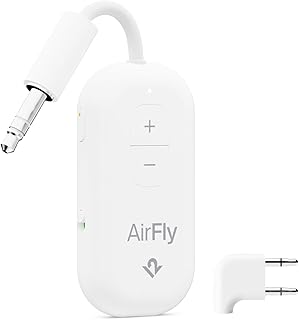


The best Bluetooth car kit is not necessarily the model with the longest feature list. The right choice depends on the age and equipment of your vehicle, how you intend to use hands-free calling, whether you need music streaming, the quality of your existing car speakers, and how much installation you are prepared to do.
For Australian drivers, it is particularly important to distinguish between a simple Bluetooth speakerphone, an FM-transmitter kit, an AUX-connected receiver and a professionally integrated hands-free system. These products can all provide wireless connectivity, but they work in very different ways and can produce noticeably different results.
Before comparing individual Bluetooth car kits, check what your vehicle already has. A car with a factory AUX input may be an excellent candidate for a compact Bluetooth audio receiver. A vehicle with no AUX input but a clear FM frequency may be better suited to an FM transmitter. An older vehicle with poor factory speakers may benefit more from a dedicated speakerphone than from a small receiver that relies on the car's audio system.
Bluetooth version numbers can be useful when comparing products, but they should not be treated as a simple ranking system where the newest version automatically means the best car kit. Real-world performance also depends on the device's Bluetooth profile support, antenna design, microphone implementation, firmware and the phone being connected.
For a Bluetooth car kit, look beyond the headline Bluetooth version and check the actual functions supported. Hands-free calling generally depends on profiles designed for phone calls, while music playback uses a different Bluetooth audio profile. A product may support wireless music but offer a less sophisticated calling experience, so specifications should be read in the context of how you intend to use the kit.
If your primary reason for buying a Bluetooth car kit is phone calls, microphone performance deserves more attention than decorative features. A good hands-free system needs to capture your voice clearly while reducing the impact of road noise, ventilation, tyres and other sounds inside the cabin.
Look for a microphone positioned so that it can pick up the driver's voice without being obstructed. Some kits place the microphone directly in the main unit, while others use a wired external microphone that can be positioned closer to the driver.
Microphone placement can make a meaningful difference. A device mounted low in a centre console may be less suitable for voice calls than a unit positioned near the driver. Conversely, a microphone mounted directly in the airflow from a dashboard vent may pick up unnecessary background noise.
Standalone speakerphones are among the simplest options for older vehicles. They contain their own speaker and microphone, so they do not necessarily need to connect to the car's stereo system.
This design can be attractive when the factory head unit lacks AUX, Bluetooth and modern connectivity. It also keeps installation straightforward. Many models are designed for dashboard, visor or other accessible mounting positions.
The trade-off is that a small integrated speaker may not provide the same listening experience as a properly connected vehicle audio system. If music quality is a priority, an AUX or integrated audio solution may be preferable.
An AUX Bluetooth receiver connects wirelessly to a smartphone while sending audio to the car through its analogue AUX input. This is often a practical solution for vehicles that already have a suitable factory audio system.
The receiver itself can be small, but the overall experience depends on the quality of the car stereo, the AUX input and the receiver's implementation. Buyers should also check how the device is powered. Some use USB power, while others incorporate a rechargeable battery.
Battery-powered receivers can reduce cable clutter, but they introduce another item that needs charging. A USB-powered model may be more convenient for frequent driving if a suitable power source is available.
FM transmitters send audio from a connected smartphone to a selected FM radio frequency, allowing the vehicle's existing radio to reproduce the sound. They can be useful for older cars without an AUX input.
The main consideration is radio interference. An FM transmitter depends on finding a frequency that provides a sufficiently clean signal in the area where you are driving. A frequency that works well in one location may encounter interference elsewhere.
When comparing FM transmitter kits, consider frequency selection, ease of tuning, microphone placement, power requirements and controls. A model with a convenient display and accessible controls may be easier to use than one that requires frequent adjustment.
Drivers who want a more permanent solution may prefer an integrated aftermarket head unit or professionally installed hands-free system. These options can offer a more factory-like appearance and may combine Bluetooth with other technologies such as smartphone integration, navigation and reversing-camera support.
They can, however, involve significantly more installation work and expense than a portable Bluetooth kit. Compatibility with the vehicle's steering-wheel controls, factory amplifier, speakers, parking sensors and other electronics should be checked before purchase.
Bluetooth audio quality is influenced by several components, so specifications should be considered as a system rather than a single number. The phone, Bluetooth connection, receiver, connection method and car stereo all contribute to the final result.
If music is important, pay attention to the supported audio codecs and connection method where the manufacturer provides that information. A Bluetooth receiver connected through a good-quality AUX input can be a straightforward way to stream music through the existing car stereo.
However, buyers should avoid assuming that codec support alone guarantees superior sound. The source material, phone settings, car stereo, speakers and listening environment all affect the result.
A kit that is excellent for music is not necessarily the best choice for hands-free calls. Music playback places emphasis on the audio output, while phone calls place much greater emphasis on microphone pickup, echo management and voice clarity.
If calls are your priority, evaluate the product as a communication device first. If you mainly want wireless music, focus more heavily on audio connectivity and how the receiver integrates with the car's stereo.
Power is an easily overlooked part of choosing a Bluetooth car kit. A device may connect successfully but become inconvenient if it requires frequent charging or occupies the only useful USB port in the vehicle.
Battery-powered kits can be positioned without requiring a permanent power cable. This can make installation cleaner and may be useful when the device is mounted on a sun visor.
The disadvantage is maintenance. The battery needs to be charged, and long periods without use can result in a device that is not ready when needed.
USB-powered units are generally convenient for vehicles equipped with an appropriate USB port or compatible car charger. Before buying, check whether the included cable length and connector type suit the intended installation position.
Also consider what happens when the car's ignition is switched off. Power behaviour can differ between vehicles and USB ports, so buyers should not assume that every port behaves in exactly the same way.
Australian driving conditions can include substantial cabin noise from coarse road surfaces, highway speeds, air conditioning and open windows. Microphone placement therefore deserves careful consideration.
A microphone close to the driver's mouth can improve voice pickup, but it should not obstruct visibility or interfere with vehicle controls. A device positioned on the dashboard may be convenient, while a visor-mounted unit can place the microphone closer to the driver.
When examining product specifications, look for information about noise reduction, echo cancellation and microphone design. These features are relevant to hands-free communication, although their presence on a specification sheet should not be treated as a guarantee of superior real-world performance.
Good controls are more important in a car than they are for many other Bluetooth accessories. Drivers should minimise the need to interact with a smartphone while the vehicle is moving.
Useful controls can include answering and ending calls, volume adjustment, play and pause functions, and voice-assistant activation. The exact control set varies by product and phone.
Physical buttons can be preferable to complicated touch interfaces because they may be easier to locate without looking away from the road. A large multifunction button can also be easier to operate than several tiny controls.
Regardless of the product, Australian drivers should follow the applicable road rules concerning mobile-phone use. Bluetooth connectivity does not automatically make every form of phone interaction lawful or safe. Requirements can differ between Australian states and territories, so check the rules applicable to where you drive.
Most mainstream Bluetooth car kits are designed to work with common smartphone platforms, but compatibility should still be checked before purchase.
For iPhone users, consider how the kit interacts with Siri, calls, music playback and automatic reconnection. For Android users, check equivalent support for Google Assistant or other supported voice features where relevant.
Phone operating-system updates can also affect how Bluetooth accessories behave. A product with clear manufacturer documentation and firmware support can therefore be preferable to an obscure device with limited technical information.
Brands such as Apple and Samsung illustrate why compatibility should be assessed at the feature level rather than simply by phone brand. Two phones may both support Bluetooth but offer different operating-system features and connection behaviour.
Bluetooth car kits should not automatically be compared with Apple CarPlay or Android Auto systems as though they were identical products. They solve overlapping but different problems.
A basic Bluetooth kit may provide hands-free calls and wireless music with minimal installation. A modern infotainment system can potentially provide a much broader interface for navigation, compatible apps, voice control and media.
If your main requirement is simply wireless calling in an older vehicle, a compact Bluetooth kit may be the more proportionate solution. If you want a modern infotainment interface, upgrading the head unit may make more sense.
Buyers should also distinguish between wired and wireless smartphone integration. A system advertised as supporting smartphone integration may still require a cable, depending on the specific hardware and configuration.
Portable car accessories are exposed to vibration, temperature changes, sunlight and frequent handling. Build quality therefore matters even when the device is inexpensive.
Inspect the enclosure, mounting mechanism, buttons, charging connector and cable construction. A mounting clip that feels secure is particularly important for visor-mounted units because repeated movement can cause poorly designed clips to loosen.
Australian summer conditions are another reason to think carefully about placement. A device mounted directly behind a windscreen can experience substantial heat and sunlight. Follow the manufacturer's storage and operating recommendations and avoid locations that could interfere with visibility or vehicle controls.
One of the biggest advantages of portable Bluetooth car kits is that many can be installed without modifying the vehicle. This makes them attractive to owners of older cars, leased vehicles or cars where permanent modifications are undesirable.
Portable speakerphones and small Bluetooth receivers can often be positioned and connected with minimal setup. Even with a simple installation, cable routing should be planned so that cables do not cross the steering wheel, pedals, gear selector or other controls.
An AUX receiver generally requires an available AUX input and an appropriate cable. Check the location of the AUX port before purchasing because some vehicles place the connector inside a centre console or another area where short cables may be inconvenient.
FM transmitters are usually straightforward to connect, but selecting a suitable frequency is important. If the product allows multiple frequencies, choose one that is clear in your local driving area and be prepared for conditions to change when travelling.
For integrated systems, professional installation can be worthwhile where vehicle electronics are complex. This is particularly relevant when retaining factory controls or integrating additional equipment.
A newer Bluetooth version does not automatically make one car kit better for every driver. Call quality, microphone design, connection stability, controls and compatibility can be more relevant to the intended use.
Buying an FM transmitter when the vehicle already has a convenient AUX input may not be the most appropriate choice. Likewise, purchasing a Bluetooth receiver without checking whether the car has the required input can lead to an unsuitable product.
For drivers who primarily need hands-free calls, excellent music specifications do not compensate for poor microphone performance. Prioritise the feature that solves your actual problem.
A rechargeable product may look convenient until you realise that it must be charged regularly. A permanently powered device may be more suitable for frequent daily use.
Even a capable Bluetooth kit can become frustrating if it is difficult to reach, blocks a vent, creates cable clutter or cannot capture your voice effectively from its intended position.
Bluetooth connectivity does not necessarily mean every phone function is supported. Check the manufacturer's compatibility information for voice assistants, contact access, call controls and automatic reconnection.
A practical comparison should start with your requirements rather than the product ranking alone. Create a short list of must-have features and then eliminate products that fail those requirements.
Customer reviews can provide useful information that is not always obvious from a specification sheet, but they should be interpreted carefully.
Look for recurring comments about connection stability, microphone clarity, battery behaviour, mounting strength, sound quality and ease of setup. A single negative review may describe an isolated compatibility issue, while repeated reports of the same problem deserve greater attention.
Pay particular attention to reviews from buyers with vehicles and phones similar to yours. A product can perform differently depending on the car stereo, phone model, cabin environment and connection method.
When comparing products on Amazon Australia or other trusted retailers, check the most recent verified customer feedback and compare it with the manufacturer's current specifications. Product revisions can sometimes mean that older reviews do not describe the exact configuration currently being sold.
Established accessory manufacturers can be useful starting points when researching Bluetooth car connectivity, particularly when documentation, compatibility information and replacement support matter.
Brand recognition should not replace product-level research. Always compare the specific model's compatibility, connection method, features and current specifications before deciding.
A portable Bluetooth kit can make sense when the existing stereo still provides acceptable sound and you only need wireless connectivity. This approach can avoid the cost and complexity of replacing a factory head unit.
It can also be a sensible option for an older second vehicle, a temporary solution or a car where preserving the original dashboard appearance is important.
Replacing the stereo becomes more attractive when you want a larger modern display, integrated navigation, smartphone projection, reversing-camera integration or other infotainment functions that a basic Bluetooth kit cannot provide.
A Bluetooth kit is not automatically the right answer for every vehicle. If the factory infotainment system already provides reliable hands-free calling and music streaming, adding another device may create unnecessary complexity.
Likewise, drivers seeking high-quality integrated navigation and smartphone controls may be better served by a compatible infotainment upgrade rather than a small Bluetooth accessory.
The goal should be to solve the specific connectivity problem with the simplest appropriate solution. More features do not necessarily mean a better ownership experience.
Portable electronics generally require little maintenance, but a few habits can help preserve usability.
Only if an FM-based solution suits your vehicle and you do not have a better direct connection available. If the car has a useful AUX input, an AUX Bluetooth receiver may be worth comparing first.
Some products support both, but the exact experience depends on the device and connection method. Check the manufacturer's specifications rather than assuming that every Bluetooth receiver provides full hands-free functionality.
It can be, particularly when you want a completely portable installation. The trade-off is that the battery needs periodic charging.
They can be useful when the vehicle lacks AUX or Bluetooth connectivity. Their effectiveness depends partly on local FM conditions and the transmitter's implementation.
Not necessarily. The most suitable product is the one that provides the required connection method, call quality, controls, compatibility and power arrangement for your vehicle. Spending more on features you will never use does not necessarily improve the result.
There is no single best option for every older vehicle. A standalone speakerphone can suit a car without useful audio inputs, while an AUX Bluetooth receiver can be a better fit when the factory stereo has an AUX connection. An FM transmitter is another option where direct audio connectivity is unavailable.
Prioritise microphone quality and placement, echo and noise-management features, connection stability, accessible call controls and compatibility with your smartphone. These factors are generally more relevant to calls than simply choosing the newest Bluetooth version.
Bluetooth and FM describe different parts of the connection process. A Bluetooth AUX receiver can send audio directly into a car's AUX input, whereas an FM transmitter uses the vehicle's radio system. If your car has a good AUX input, a direct connection may be preferable to an FM-based solution, but vehicle compatibility remains the deciding factor.
Some models are designed for music playback only, while others include microphone and hands-free calling functionality. Check the individual product specification before buying rather than assuming that an AUX Bluetooth receiver supports calls.
It can be very important for hands-free calling. A microphone positioned appropriately for the driver's voice can be easier to use in a noisy cabin than a microphone located far away or obstructed by the vehicle interior.
Many do, but compatibility varies by model and feature. Basic Bluetooth audio may work across both platforms while advanced functions, voice-assistant controls or contact handling can depend on the particular phone and accessory.
Bluetooth connectivity itself is not the same thing as unrestricted legal permission to use a phone while driving. Mobile-phone laws and permitted interactions can vary between Australian states and territories. Drivers should check the current rules applicable to their location and use the system in a way that does not create a distraction.
A portable kit is usually worth considering when you want a simple, reversible solution. Professional installation becomes more relevant when you want deeper integration with the vehicle's audio system, steering-wheel controls, display or other electronics.
There is no universal replacement interval. Consider replacing a unit when it no longer maintains a reliable connection, its battery becomes impractical, compatibility with your devices becomes inadequate, or a newer system offers functions that materially improve your use case.
The strongest Bluetooth car kit choice starts with the vehicle rather than the product ranking. Identify the connections your car supports, decide whether calls or music are the priority, and then compare products that genuinely match those requirements.
For older cars, simple solutions such as standalone speakerphones, AUX receivers and FM transmitters can provide useful wireless connectivity without replacing the entire stereo. For drivers wanting a modern infotainment experience, an integrated system may be a more appropriate long-term investment.
Before purchasing, compare current specifications, verified customer feedback, compatibility information, power requirements and installation considerations. Check today's retailer pricing separately because prices and availability can change. Most importantly, choose a system that allows you to keep phone interaction simple and minimise distraction while driving.
When assessing a shortlist of Bluetooth car kits for the Australian market, product ranking should be based on suitability rather than headline specifications alone. A useful comparison considers the complete ownership experience: compatibility, connection method, call performance, audio output, controls, power, installation, build quality and documented limitations.
This approach makes the final comparison more useful than simply selecting products by popularity. A Bluetooth car kit should be judged according to how well it solves the specific connectivity requirements of the driver and vehicle.