

♥ Wishlist
Compare 47 verified Health Monitoring Devices for Everyday Wellness in Australia products in Australia. Reviews, ratings, pros, cons and buying advice updated for October 2026.


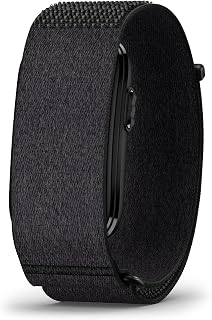


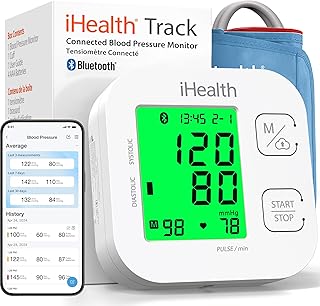


The best health monitoring device is not necessarily the one with the largest number of features. A more useful approach is to match the device to the measurement you actually need, then assess accuracy, ease of use, appropriate validation or regulatory status, data handling, replacement costs and long-term practicality.
Health monitoring products sold in Australia range from dedicated medical devices such as upper-arm blood pressure monitors and digital thermometers to consumer wearables that track activity, heart rate, sleep and other wellness metrics. These categories should not automatically be treated as interchangeable. The Therapeutic Goods Administration (TGA) explains that medical devices can include products used to measure or monitor the body, and medical devices generally need inclusion in the Australian Register of Therapeutic Goods (ARTG) unless an exemption or exclusion applies.
For that reason, buyers should distinguish between a device intended for medical monitoring and a fitness or wellness product designed primarily for personal trends. A smartwatch can be useful for observing changes in activity or heart rate, for example, but that does not automatically make every measurement equivalent to a clinically validated measurement from a dedicated medical device.
There is no single device that is ideal for every health-monitoring task. Different technologies measure different physiological signals, and each has its own strengths and limitations.
One of the most important buying decisions is identifying what the product is actually intended to do. A device marketed for general wellness should not automatically be selected when a clinician has asked for a specific medical measurement.
The TGA regulates medical devices according to their intended purpose and risk. Wearable products can fall within medical-device regulation when their intended function involves areas such as diagnosis, prevention, monitoring, prediction, prognosis or treatment of disease or injury.
When comparing products, look beyond phrases such as “health technology”, “smart health”, “clinical-style readings” or “advanced monitoring”. Check the manufacturer's stated intended use, the measurement being performed and the evidence or validation applicable to that particular function.
For Australian buyers, the ARTG can also be relevant when checking whether a product is supplied as a regulated medical device. The existence of an ARTG entry should not be confused with a blanket guarantee that every possible consumer use of a product is appropriate; the intended purpose and specific claims still matter.
For many households, a blood pressure monitor is one of the most useful dedicated health-monitoring purchases. However, choosing the wrong type can undermine the usefulness of the readings.
For routine home blood pressure monitoring, Australian healthdirect guidance recommends an automatic monitor with an upper-arm cuff that fits properly. Finger and wrist blood pressure devices are not recommended for this purpose.
The cuff is particularly important. A monitor with sophisticated electronics cannot compensate for a cuff that is unsuitable for the user's arm. Before buying, measure the relevant arm circumference and compare it with the manufacturer's stated cuff range.
Accuracy is more important than a decorative display, smartphone integration or an unusually long feature list. Healthdirect recommends using a blood pressure monitor that has been validated for accuracy, while the Heart Foundation similarly advises using validated machines.
Do not assume that a popular brand name by itself proves that a particular model has been validated for the intended use. Validation is model-specific, so check the exact model number where possible.
Built-in memory can be valuable when readings need to be tracked over time. A monitor that supports separate user profiles can also reduce the risk of mixing readings between household members.
For a single user, basic memory may be sufficient. For a couple or family, separate profiles, clear date and time records and straightforward retrieval of historical readings become much more useful.
Bluetooth connectivity can make long-term record keeping easier, but it should not automatically be treated as a reason to pay more. Consider whether you actually want app-based tracking, whether the app works with your phone, how easily readings can be exported or shared, and whether the device remains usable if you stop using the app.
A good monitor still requires good measurement technique. Healthdirect advises sitting quietly for about five minutes before measuring, keeping both feet on the floor, supporting the back and arm, placing the cuff on the bare upper arm at heart level and avoiding conversation during the measurement. It also recommends taking two readings one minute apart and recording the results.
The Heart Foundation gives similar guidance and notes that measurements are commonly taken around the same times each morning and evening over several days when home monitoring has been requested.
Healthdirect also advises avoiding caffeine and smoking for 30 minutes before a blood pressure measurement and avoiding measurement when you are stressed, in pain or uncomfortable.
Pulse oximeters are compact devices that estimate blood oxygen saturation and pulse rate. Their small size makes them convenient for home use, but buyers should avoid assuming that a displayed percentage is automatically a definitive assessment of health.
Consider sensor design, display readability, fit, battery requirements, operating instructions and the manufacturer's stated intended use. Some devices are designed for occasional spot checks, while others may be incorporated into broader monitoring systems.
The TGA's Australian Register includes pulse-oximeter products, illustrating that some pulse oximeters are regulated medical devices. The relevant status depends on the specific product and its intended purpose.
Potential sources of unreliable readings can include poor sensor placement, movement, cold extremities and other measurement conditions. If a reading appears unexpected or conflicts with how someone feels, it should not be interpreted in isolation. Seek appropriate medical advice when there are concerning symptoms or uncertainty about what a reading means.
A thermometer may look like a simple purchase, but measurement method matters. Products can measure temperature at different sites, including oral, axillary, tympanic or temporal locations, depending on the design.
When comparing thermometers, check:
For medical decisions, the number should always be interpreted alongside symptoms, age, circumstances and professional advice rather than treated as an isolated diagnosis.
Wearables are attractive because one device can provide continuous or frequent data without requiring a separate measurement session for every metric. Depending on the model, a smartwatch or fitness tracker may collect activity, heart rate, sleep-related information, exercise data and other measurements.
The main advantage is often trend visibility. Seeing changes over days or weeks can be more useful for personal awareness than checking a metric once and forgetting it.
However, wearable measurements can differ substantially in purpose and methodology. A wellness metric should not automatically be treated as equivalent to a dedicated medical measurement. TGA guidance confirms that some wearables can be medical devices when their intended functions meet the relevant criteria, while other wearables may primarily serve fitness or wellness purposes.
For glucose monitoring, the ongoing system matters as much as the meter itself. Buyers should consider compatible test strips, lancets, sample requirements, storage conditions, expiry dates, cleaning requirements and the availability of replacement supplies.
A low-cost meter can become less economical if its compatible consumables are expensive or inconvenient to obtain. Conversely, a more feature-rich system may offer little practical advantage if its additional functions are never used.
When comparing glucose-monitoring products, check the complete workflow from preparing the test to recording the result. The device should be easy enough to use consistently and should have clear instructions for its intended purpose.
Connected health devices can make monitoring more convenient, but they also introduce another layer of consideration: data management.
Before buying a connected health product, review the manufacturer's privacy information and understand what data is collected, where it is stored and what account or application is required for the device's major functions.
Battery performance is easy to overlook when comparing specifications. A device that sits in a drawer because it needs frequent charging is not particularly useful as a monitoring tool.
For dedicated monitors, consider whether the device uses standard replaceable batteries, rechargeable batteries or mains power. For wearables, compare stated battery life with the actual features you intend to use because continuous sensors, notifications, GPS and bright displays can affect how frequently charging is required.
If the device is intended for an older family member, a simple battery compartment and a clear low-battery indicator may be more useful than an elaborate charging system.
A health measurement is only useful if the person taking the reading can understand the result. Look for large numbers, strong contrast, intuitive controls and clearly labelled buttons.
For users with reduced vision or limited dexterity, physical buttons can sometimes be preferable to tiny touchscreen controls. Voice prompts may also be useful where offered, but they should be considered alongside the readability of the physical display.
For shared household devices, simple operation can reduce mistakes between users. A product with fewer controls may be preferable to a technically advanced model that is difficult to operate correctly.
Price alone is a poor way to compare health-monitoring products. Instead, consider total ownership cost and practical value.
A low price is not a bargain if the product does not perform the measurement you actually require. Start with the intended purpose and suitable measurement technology, then compare prices within that category.
Health-related branding does not mean every sensor has been validated for medical decision-making. Check the precise function and intended purpose.
This is one of the most important mistakes with blood pressure monitors. A monitor should be selected with the user's arm circumference and the manufacturer's compatible cuff range in mind.
Customer ratings can reveal practical issues such as confusing controls or poor packaging, but they do not replace technical specifications or validation evidence. A five-star review cannot establish that a device is medically accurate for your intended use.
Bluetooth, cloud dashboards, advanced notifications and extensive analytics can be useful, but only when they fit your routine. A simpler product can be the better choice when the main requirement is reliable, repeatable measurement.
Products requiring strips, sensors or replacement accessories should be assessed as complete systems rather than one-time purchases.
Even a suitable device can produce misleading information if it is used incorrectly. Read the manufacturer's instructions and follow any measurement procedure provided by your healthcare professional.
When researching health-monitoring products, Australian shoppers may encounter established brands such as Omron, Braun, Beurer, Withings, Garmin, Apple, Samsung, Philips and Accu-Chek. Brand familiarity can be a useful starting point, but it should not replace model-specific research.
For medical measurements, compare the exact model, intended use, validation information, cuff or sensor specifications and Australian regulatory information where applicable. For consumer wearables, compare the actual sensors, supported health functions, smartphone compatibility, battery performance and software ecosystem.
The key principle is simple: compare the product, not merely the logo on the product.
Manufacturers often provide extensive specification tables, but not every specification has equal importance. Focus first on measurements, intended use, accuracy or validation information, physical compatibility and required accessories.
For a medical measurement, accuracy and appropriate validation should generally take priority over convenience. For a wellness tracker, convenience and long-term adherence may be more important because the objective may be to observe general trends rather than make a clinical measurement.
This distinction helps explain why there is no universal “best” health monitoring device. A dedicated upper-arm blood pressure monitor may be the more appropriate tool for home blood pressure monitoring, while a smartwatch may be more convenient for everyday activity tracking.
Older users may benefit from devices that emphasise simplicity rather than maximum functionality. A large display, straightforward controls, comfortable cuff, clear instructions and easily accessible readings can make regular monitoring easier.
For family members assisting with monitoring, stored readings and multiple-user functionality can also be useful. However, the device should remain understandable to the person who will actually use it.
A family may have different requirements from an individual buyer. A shared blood pressure monitor, for example, may benefit from multiple-user memory and a cuff that suits the intended users.
Do not assume that one device is appropriate for everyone. Children, adults and older people may have different measurement requirements, and some products are designed for particular age groups or use cases.
Where several people use the same monitor, clearly identifying users and keeping records separate can help prevent confusion.
Frequent travellers should consider compactness, battery operation, protective storage and ease of packing. A portable device is more useful when it can be transported without damaging the cuff, sensor or display.
Check the power requirements before travelling internationally. For connected devices, also consider whether the product depends on a particular smartphone application, internet connection or account.
Do not sacrifice suitability or accuracy merely to save space. For medically important monitoring, the most compact product is not necessarily the best product.
Regular maintenance helps preserve reliable operation. Follow the manufacturer's cleaning, storage and battery instructions rather than applying a generic cleaning method.
Even a validated monitor should be used correctly and maintained appropriately. If readings appear inconsistent with previous measurements, unexpectedly change, or repeatedly conflict with readings obtained by a healthcare professional, discuss the issue with the professional and consider having the device checked or compared according to appropriate guidance.
Healthdirect specifically recommends using a validated monitor and notes that a healthcare professional can provide advice about selecting an appropriate device.
Many health measurements naturally fluctuate. A single reading can be influenced by activity, stress, timing, posture, recent food or drink and other circumstances. Consistent measurement and record keeping can therefore provide more useful information than repeatedly checking a number without a consistent method.
For blood pressure, Australian guidance describes structured home monitoring over multiple days when clinically indicated, commonly involving morning and evening measurements and repeated readings at each session.
The goal is not to become preoccupied with every individual number. The goal is to collect useful information that can be interpreted appropriately and, where necessary, discussed with a qualified healthcare professional.
When evaluating a shortlist of ten products, avoid ranking them solely by the number of features. A better editorial comparison considers how well each product solves a specific monitoring problem.
Choose a straightforward dedicated device with a clear display, simple controls, appropriate measurement technology and dependable record keeping. Avoid paying extra for advanced functions that do not improve your actual monitoring routine.
Look for memory, multiple-user support, reliable app synchronisation and useful historical charts. Make sure the connected features remain compatible with your smartphone and that you understand how your health data is managed.
A smartwatch or fitness tracker may be more suitable when the main objective is observing activity, exercise, sleep patterns and general trends. Compare sensor capabilities and battery life with the activities you actually perform.
Follow the measurement method recommended by your doctor or other qualified healthcare professional. A consumer device should not be selected simply because it is fashionable or highly rated if a specific medical measurement and validated device have been recommended.
Smart features can improve convenience, but they can also make a product appear more capable than it is. Automated analysis, trend graphs, notifications and algorithm-generated insights are useful only when the underlying measurement is suitable for the intended purpose.
Consider smart functions as an additional layer rather than the primary reason to buy a medical monitoring product. First establish whether the device measures the correct parameter appropriately; then decide whether the software adds useful convenience.
A strong long-term choice is one that you can use consistently and correctly. Reliability is not simply about hardware. It includes the availability of appropriate accessories, understandable instructions, manageable operating costs, practical battery arrangements and continued usability.
For connected products, software support and smartphone compatibility can also affect useful life. A device may remain physically functional while becoming less convenient if its application no longer works with the user's preferred phone or operating system.
Australian buyers should pay particular attention to regulatory information when purchasing products marketed for medical purposes. The TGA states that, unless exempt or excluded, medical devices need to be included in the ARTG to be legally supplied in Australia. The TGA also notes that Unique Device Identification requirements began from 1 July 2026, initially applying to higher-risk device classes.
This makes it sensible to distinguish an ordinary consumer wellness gadget from a regulated medical device when researching Australian products. Buyers should verify the specific model and intended purpose rather than relying on broad product-category claims.
There is no single best device for every household. The appropriate choice depends on the measurement required. For home blood pressure monitoring, healthdirect recommends an automatic, validated upper-arm monitor with a cuff that fits properly.
It depends on the specific device, measurement and intended purpose. A smartwatch's wellness features should not automatically be considered equivalent to a dedicated medical device. Check the manufacturer's intended use and any relevant validation or regulatory information for the exact model.
For routine home blood pressure monitoring, Australian health guidance recommends automatic upper-arm monitors and does not recommend finger or wrist devices.
The appropriate frequency depends on why you are monitoring it and what your healthcare professional recommends. When structured home monitoring is requested, healthdirect notes that people are often asked to measure twice daily for seven days, with at least five days of readings.
Bluetooth is useful if you want automatic transfer and digital record keeping. It is not essential for everyone. If you prefer a simple device and can reliably record measurements manually, Bluetooth may not justify a higher purchase cost.
No. Additional measurements can create more information without necessarily creating more useful information. The best device is one that measures relevant information reliably and presents it in a form you can understand and use appropriately.
Check that the cuff is designed for your upper arm and that its stated circumference range includes your arm size. A proper fit is an important part of obtaining useful measurements.
A consumer measurement should not automatically be treated as a diagnosis. Some medical devices have diagnostic or monitoring purposes, but interpretation depends on the device, measurement method, clinical context and professional guidance.
A single unexpected result may need to be repeated under appropriate measurement conditions, depending on the device and situation. Do not ignore concerning symptoms simply because a consumer device produces a reassuring number. When you are unsure how to interpret a result, seek appropriate medical advice.
The strongest health-monitoring purchase is one that matches the user's actual needs rather than the longest feature list. Start with the measurement, verify the appropriate technology, check model-specific accuracy or validation information, make sure the device fits correctly and consider the total cost of ownership.
For Australian consumers, regulatory status and intended use deserve particular attention when a product makes medical claims. For blood pressure monitoring, validated upper-arm devices remain an important benchmark, while smartwatches and fitness trackers can be valuable for broader wellness and trend tracking when their capabilities are understood correctly.
Before making a final purchase, compare the latest specifications, current customer feedback, accessory requirements and Australian availability for the exact model. Most importantly, use any health-monitoring device according to its instructions and treat measurements as information to support informed decisions, not as a replacement for professional medical assessment.