

♥ Wishlist
Compare 54 verified Bubbles for Fun, Parties and Outdoor Play products in Australia. Reviews, ratings, pros, cons and buying advice updated for October 2026.

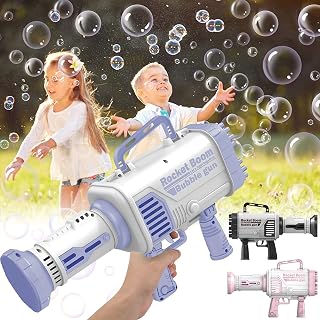


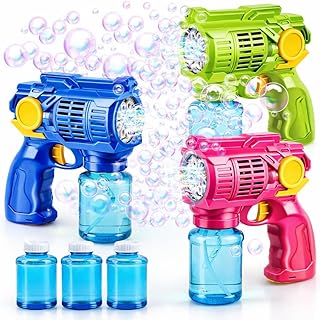




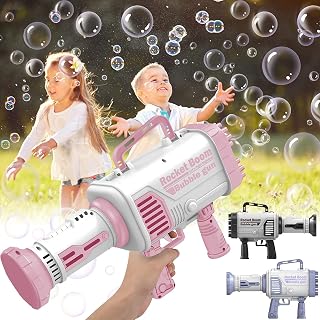
Choosing the best bubbles product is about more than finding the bottle with the most attractive packaging. Bubble wands, refill solutions, bubble machines and larger bubble-making toys can differ substantially in bubble size, solution consistency, ease of use, mess, durability and suitability for different ages.
For Australian shoppers, the right choice also depends on where and how the product will be used. A small bubble wand can be ideal for occasional outdoor play, while a rechargeable or battery-powered bubble machine may make more sense for parties, birthdays and larger gatherings. Families looking for frequent use should also consider the cost and availability of compatible bubble solution rather than focusing only on the initial purchase price.
This buying guide explains the features worth comparing when choosing bubble products in Australia in 2026. It is designed to help you assess specifications, construction, age suitability, operating method, refill requirements and practical ownership considerations before buying.
There is no single type of bubble product that is best for every situation. The most suitable option depends on the amount of bubbles required, the user's age, the available outdoor space and whether convenience or hands-on play is the priority.
The best buying decision starts with the intended use. Before comparing individual products, establish whether you need occasional entertainment, a toy for regular outdoor play, a party accessory or a reusable system requiring frequent refills.
Age suitability should be checked against the manufacturer's instructions rather than inferred from the appearance of a product. Some bubble products contain small components, detachable parts, battery compartments or accessories that may not be appropriate for younger children.
For toddlers and preschoolers, simplicity can be an advantage. A straightforward wand with a comfortable handle may be easier to supervise than a complicated motorised device. Older children may enjoy bubble guns, large-bubble accessories or machines that create a more substantial volume of bubbles.
Adult supervision is particularly important where children may put bubble solution, accessories or components in their mouths. Bubble products should be used according to the manufacturer's safety directions.
Manual bubble toys encourage active participation. Children dip a wand into solution and create bubbles through movement or blowing. They generally have fewer mechanical components, which can make them straightforward to store and maintain.
Automatic products use a motor, fan or rotating mechanism to produce bubbles. Their main advantage is convenience. Instead of repeatedly dipping and blowing, the user activates the device and allows it to produce bubbles automatically.
Automatic does not necessarily mean better. A machine may require batteries, charging, cleaning and a suitable quantity of bubble solution. A manual wand may be the more practical option when portability and simplicity matter most.
Bubble solution is one of the most important parts of the overall experience. A bubble machine or toy can only perform as intended when it is paired with suitable solution and used under appropriate conditions.
Check whether the manufacturer recommends a particular type of solution, whether solution is supplied with the product and whether replacement solution is readily obtainable. If you expect to use the product regularly, refill compatibility can be more important than the amount of solution included in the initial package.
Do not assume that every bubble solution is interchangeable with every bubble machine. The viscosity and formulation of a solution can affect how effectively a device's wands, wheels or openings produce bubbles.
Bubble toys are frequently used outdoors and may be handled enthusiastically by children. Examine the construction of the handle, reservoir, moving parts, switches, battery compartment and other components.
For a motorised machine, pay particular attention to the mechanism that contacts the bubble solution. Parts exposed to liquid should be reasonably accessible for cleaning according to the manufacturer's instructions. A product that is difficult to rinse or maintain may become inconvenient if it is used frequently.
Reservoir capacity affects how often a bubble toy needs to be refilled. A smaller reservoir can keep a lightweight handheld product compact, while a larger reservoir can be useful for machines operating for longer periods.
However, bigger capacity is not automatically preferable. A larger liquid container can increase the weight of a handheld toy and may be unnecessary for short play sessions. Consider how long the product normally needs to operate before deciding how much capacity you actually need.
If your priority is producing a large quantity of bubbles with minimal effort, a bubble machine deserves closer attention than a conventional wand.
Different machines use different combinations of rotating bubble wheels, wands, fans and air outlets. The design influences how solution reaches the bubble-forming loops and how the resulting bubbles are dispersed.
Rather than judging a machine solely by a manufacturer's headline claim about bubble output, examine the overall design and intended operating conditions. A machine producing bubbles across a broad area may be more useful for a party than a compact unit designed for close-range play.
Bubble machines commonly use disposable batteries, rechargeable batteries or mains power, depending on the design.
When comparing powered models, check the manufacturer's stated battery requirements, charging method and operating instructions. Avoid assuming that a longer advertised runtime will translate directly to every use case because operating conditions and usage patterns can affect actual performance.
For Australian families taking bubble products to parks, gardens, beaches or events, portability can be a significant factor. Look at the product's dimensions, weight, carrying method and whether accessories can be stored together.
A compact machine is easier to transport, but a larger machine may provide a more substantial bubble output. The best balance depends on whether portability or coverage is your primary concern.
Traditional bubble wands remain appealing because they are simple and interactive. They allow children to control the movement that creates bubbles rather than simply switching on a motorised device.
Large-bubble toys use larger loops or specialised designs. Their performance can be affected by wind, humidity, temperature, solution formulation and technique. Large bubbles are particularly sensitive to environmental conditions, so even a well-designed wand may not produce identical results every time.
For younger children, the handle and overall simplicity can matter more than the ability to create exceptionally large bubbles. For older children and outdoor activities, experimenting with different wand shapes can provide additional entertainment.
Bubble solution deserves as much attention as the toy itself. A product may include a visually appealing wand or machine, but the solution ultimately needs to form a stable film capable of producing bubbles.
Bubble solutions vary in formulation and consistency. A solution that works well with one type of toy may not necessarily deliver the same results with another. Always follow the manufacturer's guidance where specific solution requirements are stated.
Frequent users should calculate the ongoing cost of bubble solution rather than evaluating only the purchase price of the toy. A low-cost bubble machine can become less economical if it requires frequent replacement supplies that are difficult to source or incompatible with alternatives.
Store bubble solution according to its packaging directions and keep it securely closed when not in use. Spilled solution can create slippery surfaces, so clean affected areas promptly and follow appropriate household safety practices.
The materials used in a bubble product affect weight, durability, cleaning and everyday handling. Plastic is common because it is lightweight and practical for products that regularly come into contact with liquid.
When evaluating a product, look beyond the material name. Pay attention to joints, hinges, switches, caps, handles and moving mechanisms. These areas can have a greater effect on practical durability than the basic material used for the main body.
For motorised models, inspect whether the battery compartment appears appropriately protected and whether the manufacturer provides clear instructions for dealing with liquid exposure. Never operate or clean an electronic product contrary to its instructions.
Battery-operated bubble toys can be convenient, but they introduce additional considerations that do not apply to simple wands.
Rechargeable models should also be assessed for charging requirements and storage instructions. If the product is intended for children, consider whether an adult will be responsible for charging and preparing the device.
Outdoor use is generally the easiest environment for bubble products because there is more ventilation and fewer surfaces that need protection from solution and bubbles.
A backyard can be ideal for bubble machines because the user can select a suitable location and keep the activity away from delicate household furnishings. Consider wind direction and avoid positioning the machine where bubbles will continuously travel toward doors, indoor floors or slippery surfaces.
For parties, an automatic bubble machine can reduce the amount of supervision required to keep bubbles flowing. Consider coverage, power source, reservoir capacity, placement and how easily the machine can be stopped and refilled.
Indoor bubble play requires additional caution because bubble solution can make floors and other surfaces slippery. If a product is used indoors, follow the manufacturer's instructions and consider whether the surface can be cleaned safely and easily.
When shopping in Australia, compare the actual product specification rather than relying on a product title or promotional photograph. Marketplace listings can sometimes use similar terminology for products with substantially different designs.
Check the stated dimensions, included accessories, power requirements, recommended age range, solution capacity and operating instructions. Also check whether the seller provides the exact model number so that specifications can be compared accurately between retailers.
For mains-powered or rechargeable electrical bubble machines, Australian shoppers should pay particular attention to electrical specifications and safety information. A product designed for another market may have different power requirements, plugs or charging arrangements.
For any electrical product, verify that the model is intended for Australian use and follow the supplied instructions. Do not rely solely on a photograph of a plug or a generic marketplace description.
Brand recognition can be useful when narrowing a large selection, but it should not replace checking the specification of the exact product. Established toy and bubble brands that shoppers may encounter include Fubbles, Gazillion, Little Kids and Crayola, depending on the product category and retailer.
For bubble machines, also compare the individual model rather than assuming every product from the same manufacturer has identical performance. Reservoir size, motor design, power source and included accessories can vary substantially between models.
Large numerical output claims can sound impressive, but they do not always explain the actual user experience. Bubble distribution, size, operating time, solution consumption and environmental conditions also matter.
A product that is inexpensive initially may be inconvenient if compatible solution is difficult to find. Frequent users should consider the complete ownership cycle, including refills and replacement components where applicable.
A larger machine can be unnecessary if the product will only be used for short sessions. Bigger capacity can also mean greater weight and storage requirements.
Manual wands are excellent for interactive play but can become impractical when many children need bubbles simultaneously. A machine may be more appropriate when consistent bubble production is required across a larger area.
Bubble solution can drip from wands, reservoirs and children's hands. Consider where the product will be used and how easily it can be cleaned after play.
Always check compatibility. Using an unsuitable formulation can affect bubble production and may create unnecessary cleaning problems.
A useful comparison should look at several criteria simultaneously instead of ranking products by one feature.
A basic bubble wand is often the most straightforward choice for occasional outdoor play. It has fewer components to operate and lets children participate directly in making bubbles.
A motorised bubble machine is more appropriate when the objective is to produce bubbles continuously without someone repeatedly dipping a wand.
For parties and larger gatherings, prioritise bubble coverage, power options, reservoir capacity and ease of refilling. A compact handheld toy may be less suitable when bubbles need to be distributed across a wider area.
Choose a lightweight wand or compact battery-powered product when storage and transport are more important than maximum bubble production.
Frequent users should give greater weight to refill compatibility, construction, cleaning requirements and ongoing running costs. A durable reusable product can be more practical than repeatedly replacing inexpensive novelty toys.
Bubble performance is not determined by the toy alone. Outdoor conditions can have a noticeable effect on bubble formation and longevity.
Wind can disperse bubbles quickly and may make large bubbles difficult to form. Very hot or dry conditions can also affect how quickly a bubble film evaporates. Humidity, temperature and the surrounding environment can influence results as well.
For this reason, avoid treating performance claims as guarantees of identical results in every Australian climate or every outdoor setting. The same product may behave differently in a sheltered backyard, a windy park or another exposed location.
Regular maintenance can help keep reusable bubble products functioning properly. Follow the manufacturer's cleaning instructions because different products have different requirements.
Do not use improvised cleaning methods that could damage motors, switches, seals or electrical components.
Rinse or clean reusable wands according to the product instructions and allow them to dry appropriately before storage. Avoid leaving solution sitting unnecessarily in components, particularly when the manufacturer recommends emptying the product after use.
Bubble products are generally designed for recreational use, but normal product-safety precautions still apply. Read the age recommendations and warnings supplied with the exact model before use.
The choice between a conventional bubble toy and an automatic machine is primarily about control and convenience.
Customer reviews can provide useful information, but they should be interpreted alongside the product specification. Look for recurring comments about the same practical issue rather than relying on one exceptionally positive or negative review.
Pay particular attention to comments concerning battery life, leakage, ease of refilling, cleaning, durability, bubble production and suitability for the intended age group. Also distinguish between criticism of the product itself and criticism caused by unsuitable solution, poor weather or incorrect operation.
When comparing products on Amazon Australia or other Australian retailers, check that the reviews relate to the exact model and configuration you intend to buy. Similar product names can sometimes refer to different versions.
The lowest purchase price is not necessarily the lowest overall cost. Consider how frequently the product will be used and what supplies it will require.
The best option depends on how you intend to use it. A manual wand can be the better choice for simple outdoor play, while a bubble machine can be more suitable for parties or situations where continuous bubble production is preferred. Compare age suitability, product design, power source, solution requirements, portability and maintenance before choosing.
A bubble machine can be worthwhile when convenience and continuous output are more important than hands-on play. It can also be useful for parties and groups. For occasional one-child use, however, a simple wand may provide everything required without the additional batteries, charging and maintenance associated with a motorised device.
For parties, look for a model designed to provide broad bubble distribution and consider its reservoir, power source, portability and operating controls. The appropriate size depends on the event space and how long the machine is expected to operate.
Not necessarily. Check the manufacturer's instructions for the exact machine. Different products can have different solution requirements, and an unsuitable formulation may affect performance or make cleaning more difficult.
They serve different purposes. Large-bubble wands are intended for oversized bubbles and can be particularly entertaining for outdoor activities, but their performance is more sensitive to weather and technique. Standard wands are generally simpler for everyday play.
Check the manufacturer's recommended age, construction, handle design, small-part warnings, solution requirements and ease of use. For younger children, straightforward operation and appropriate supervision are particularly important.
Consumption varies according to the machine design, operating duration, solution level and usage conditions. If the machine will be used regularly, check its reservoir capacity and consider the ongoing cost of compatible bubble solution.
Some may be used indoors, but bubble solution can make floors and surfaces slippery. Check the manufacturer's instructions and consider the type of flooring and the ease of cleaning before using a bubble product inside.
They can be convenient because they do not require a mains outlet at the point of use. However, battery-powered models introduce additional considerations such as battery replacement, charging requirements and battery-compartment safety.
Follow the storage directions on the product packaging. Keep the container closed when not in use and store it in an appropriate location away from young children.
Cleaning frequency depends on the manufacturer's instructions and how frequently the machine is used. Regular cleaning of liquid-contact components can help prevent residue from accumulating, but electrical parts should only be cleaned using methods approved by the manufacturer.
Before purchasing one of the best bubbles products in Australia, compare the complete specification rather than selecting solely on appearance or promotional claims.
An independent buying guide should distinguish between manufacturer specifications, retailer information and customer feedback. Product descriptions can explain what a manufacturer says a product is designed to do, while customer reviews can reveal practical considerations such as setup, handling and maintenance. Neither should be treated as a substitute for the other.
For a useful 2026 comparison, shoppers should verify the exact model, included accessories, current specifications, age guidance, power requirements and solution compatibility before making a purchase. Product availability, retailer pricing and stock can change, so current information should always be checked at the time of ordering.
The most suitable bubble product is ultimately the one that fits the intended user, environment and frequency of use. A simple wand can be the right answer for everyday play, while a powered machine can make sense when a larger, more continuous bubble display is required. By comparing these practical factors rather than relying on a single headline feature, Australian shoppers can make a more informed buying decision.