

♥ Wishlist
Compare 57 verified Drones for Sale in Australia products in Australia. Reviews, ratings, pros, cons and buying advice updated for October 2026.




Choosing a drone in Australia is about more than camera resolution or advertised flight time. The right model depends on how you intend to fly, where you expect to use it, how much equipment you are comfortable carrying, the type of footage you want to produce, and the Australian rules that apply to your operation.
For most buyers, the strongest shortlist is built around compact camera drones from established manufacturers such as DJI, Autel Robotics and Potensic. Models such as the DJI Mini 4 Pro, DJI Flip, DJI Mini 4K, DJI Mini 3, DJI Air 3S, DJI Mavic 4 Pro, DJI Neo and DJI Avata 2 cover very different use cases, while the Potensic ATOM 2 provides another compact camera-drone option worth comparing. Product specifications, bundle contents, firmware features, retailer pricing and availability can change, so check the latest specifications and today's Australian prices before buying.
There is also an important distinction between a drone that is easy to own and one that is easy to operate legally. In Australia, recreational flyers generally do not need drone registration, a licence or operator accreditation, but they still have to follow CASA safety rules. Business or work-related use has additional registration and accreditation requirements regardless of whether the drone weighs 250 g or less.
The DJI Mini 4 Pro is one of the most complete choices for an Australian buyer who wants a genuinely compact drone without giving up advanced camera and flight features. DJI lists the aircraft at under 249 g with a 1/1.3-inch CMOS sensor, 4K/60fps HDR video, a three-axis mechanical gimbal, omnidirectional obstacle sensing and subject-tracking features. Its standard battery is rated for up to 34 minutes under DJI's controlled test conditions, although real-world flight time varies with wind, temperature, flight style, payload and battery condition.
It is a particularly sensible option for travellers, content creators, landscape photographers and enthusiasts who expect their first drone purchase to remain useful as their skills improve. Buyers who only want casual aerial experimentation may not need to spend at this level.
Do not automatically choose the most expensive bundle. Compare the aircraft, controller, number of batteries, charging hub, spare propellers and carrying accessories separately. A larger bundle can be worthwhile for frequent flying, but the basic package may be sufficient for occasional users.
The DJI Air 3S occupies a different part of the market from the Mini series. It is intended for buyers who are willing to accept a larger aircraft in exchange for more capable imaging and flight hardware. DJI describes it as a dual-camera travel drone, making the platform especially interesting for creators who want more than the single-camera perspective commonly found on compact drones.
Choose a model in this class when camera versatility matters more than minimum size. It can make more sense for a serious creator who travels with dedicated camera equipment than for someone buying a drone simply to learn basic controls.
The DJI Mavic 4 Pro represents the flagship end of the consumer-focused DJI camera-drone range. It is aimed at buyers who prioritise sophisticated aerial imaging, camera flexibility and high-end flight features rather than the smallest possible footprint. DJI's Australian store currently lists the Mavic 4 Pro among its flagship camera drones.
A flagship drone is unnecessary for a buyer whose main priorities are low weight, simple operation, casual holiday footage and low replacement cost. A premium camera platform also means that accidental damage can have a much greater financial impact.
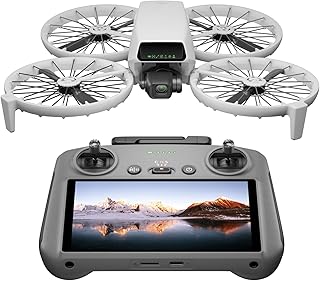
The DJI Flip is particularly interesting for first-time buyers who want an easier transition from smartphone photography to drone photography. DJI lists it at under 249 g and equips it with a foldable full-coverage propeller guard, a 1/1.3-inch sensor, 4K/60fps HDR video and a three-axis mechanical gimbal. DJI also lists a maximum advertised flight time of 31 minutes under controlled test conditions.
Buyers should not interpret a propeller guard as permission to fly close to people, buildings, vehicles or other hazards. CASA's safety requirements continue to apply, and drones must not be flown over people.
The DJI Mini 3 remains worth considering when a buyer wants a compact camera drone but does not need every advanced feature offered by the Mini 4 Pro. DJI's Australian comparison material places the Mini 3 below the Mini 4 Pro in feature set while highlighting its longer maximum advertised flight time in the standard configuration and its support for vertical shooting.
You want more sophisticated obstacle sensing, more advanced subject tracking, higher-end video options and a broader set of automated flight capabilities.
The DJI Mini 4K is an attractive starting point for buyers who primarily want an affordable, recognisable camera drone rather than a feature-heavy professional platform. DJI's Australian comparison material identifies it as an entry-level Mini-series option with a sub-249 g design and 4K video capability.
Entry-level pricing usually means fewer advanced sensing, tracking, imaging and workflow features. Buyers should decide whether saving money now is preferable to buying a more capable drone that may remain useful for longer.
The DJI Neo takes a different approach from traditional camera drones. It is designed around highly portable, simple aerial content creation and is particularly appealing to users who want quick shots without carrying a conventional drone setup everywhere. DJI's Australian store describes Neo as a palm-sized vlog drone.
If you want maximum control over composition, long-range flight planning, advanced obstacle sensing, sophisticated camera settings or a more traditional aerial-photography workflow, compare the Neo with the Mini 4 Pro, Air 3S or another conventional camera drone before purchasing.
The DJI Avata 2 belongs in a separate category because it is an FPV-oriented drone rather than simply another compact camera drone. FPV flying changes the experience considerably: the pilot interacts with the aircraft through a more immersive control system and the resulting footage can emphasise speed, motion and proximity.
FPV systems can have a steeper learning curve and require more attention to the flight environment. They are not automatically better for landscape photography, casual travel or beginner aerial photography. Consider whether the flying experience itself is one of your main reasons for buying a drone.
The Potensic ATOM 2 deserves consideration for buyers who want an alternative to the dominant DJI ecosystem. Potensic lists the ATOM 2 at under 249 g with a 1/2-inch CMOS sensor, 48 MP still imaging, a three-axis gimbal and 4K recording capabilities.
Compare the complete ecosystem rather than the aircraft specification alone. Look at controller design, application quality, firmware support, replacement parts, batteries, charging accessories, storage requirements and Australian retailer support. A drone is a system, not simply an aircraft.
The Autel EVO Nano+ is another compact alternative for buyers who want a camera drone outside the DJI range. Autel lists the Nano+ at 249 g, with a 1/1.28-inch CMOS sensor, three-axis mechanical gimbal, 50 MP photography, 4K/30fps HDR video and an advertised 28-minute battery life under its stated test conditions.
Do not compare only megapixels. Sensor size, lens aperture, image processing, dynamic range, stabilisation, bitrate, colour profiles and the quality of the final footage all matter. A higher megapixel number does not automatically mean better photographs.
Beginners should prioritise predictable controls, stable hovering, a clear application, reliable return-to-home behaviour, useful safety features and reasonable replacement costs. DJI Mini 4K, DJI Mini 3 and DJI Flip are sensible models to compare, while DJI Neo is worth considering if simplicity and portability are more important than traditional manual control.
Photographers should focus on sensor size, lens characteristics, RAW support, dynamic range, shutter control, colour profiles and gimbal performance. The DJI Mini 4 Pro offers a particularly strong combination of portability and photographic control, while the DJI Air 3S and DJI Mavic 4 Pro are more appropriate when advanced camera capability is a higher priority.
Travel buyers should consider more than the drone's folded dimensions. Add the controller, batteries, charging equipment, spare propellers, cables and protective case when assessing the actual travel footprint. A drone that is slightly heavier but significantly easier to operate may be a better travel companion than an ultra-small model with compromises that frustrate you during a trip.
Creators producing vertical video should look for genuine vertical shooting or camera formats that provide enough resolution for high-quality vertical crops. Subject tracking and automated flight modes can also reduce the time required to produce usable clips. DJI Mini 4 Pro, DJI Flip, DJI Mini 3 and DJI Neo are particularly relevant models to compare for this use case.
Landscape photographers should prioritise image quality, dynamic range, stable hovering, wind performance, manual exposure controls and the ability to shoot RAW. Battery endurance also matters because remote landscapes can make battery changes inconvenient. A larger drone may provide advantages in wind, but portability can be more important when hiking to a location.
Choose an FPV platform such as DJI Avata 2 if the immersive flying experience is central to your purchase. Conventional Mini-series camera drones are generally more appropriate when the priority is straightforward aerial photography rather than FPV piloting.
Sensor size is one of the most important specifications for camera quality. Larger sensors can generally collect more light and provide greater flexibility in difficult lighting conditions, although actual image quality also depends on lens design, processing, exposure and recording format.
For casual daylight filming, an entry-level sensor may be perfectly adequate. For sunrise, sunset, shaded landscapes and serious post-production, moving to a larger or more capable sensor can make a noticeable difference.
Megapixel counts should not be used as the sole measure of camera quality. A 48 MP or 50 MP specification may sound impressive, but the usefulness of those pixels depends on sensor size, lens quality, noise performance, image processing and the way the camera combines or outputs pixels.
A three-axis mechanical gimbal is one of the most valuable features for smooth aerial video. It helps compensate for movement from the aircraft and allows the camera to remain level while the drone changes direction.
Electronic stabilisation can also be useful, but buyers creating polished video should understand the difference between mechanical gimbal stabilisation and software-based correction.
4K is now common across many serious consumer drones, but resolution alone does not tell the whole story. Consider frame rates, HDR support, bitrate, codec, colour profiles and whether the drone can maintain the desired resolution at the frame rate you actually plan to use.
For conventional cinematic footage, 24, 25 or 30 fps may be appropriate depending on your workflow. Higher frame rates can be useful for slow motion, action footage and smoother movement, but they can increase storage requirements and may involve other recording compromises.
Obstacle sensing can reduce the chance of collisions, but it is not a substitute for piloting skill. Sensors can have blind spots, may perform differently in darkness or low-texture environments, and may not recognise every thin object such as wires or branches.
Advanced sensing systems are particularly valuable to buyers who expect to use automated tracking or complex flight modes. However, always maintain visual awareness of the aircraft and the surrounding environment.
Satellite positioning helps a drone maintain its position and can support return-to-home functions. This is very different from the simple altitude-hold behaviour found on inexpensive toy drones.
Even a GPS-equipped drone should never be treated as autonomous or infallible. Signal quality, environmental conditions, compass considerations, firmware settings and the selected return-to-home altitude all matter.
Advertised transmission distance is generally measured under controlled conditions and should not be interpreted as a practical target for everyday Australian flying. Buildings, trees, terrain, radio interference and regulatory requirements can all limit usable distance.
For most recreational users, reliable connection quality and a clear live view are more useful buying criteria than chasing the highest theoretical range number.
Manufacturers typically publish maximum flight times measured under controlled conditions. Actual usable flight time is lower because pilots need a safety reserve and because wind, temperature, flight speed, recording, obstacle sensing and battery age affect consumption.
For buyers who plan to spend several hours outdoors, purchasing additional compatible batteries and an appropriate charging solution can be more useful than choosing a drone solely because its advertised maximum flight time is a few minutes longer.
Weight is an important consideration in Australia, but a sub-250 g drone is not exempt from all safety requirements. CASA states that recreational flyers do not need to register their drone or obtain operator accreditation simply because they fly for fun, including when the drone weighs 250 g or less. However, all drone operators still have to follow applicable safety rules.
For work or business use, the situation is different. CASA states that commercial or work-related drone operations require registration and operator accreditation or the appropriate remote pilot licensing pathway, regardless of whether the aircraft is a micro drone.
That means the sub-250 g category should be viewed as a useful aircraft characteristic, not as a universal legal exemption.
Before buying a drone, learn the rules that apply to your intended activity. CASA states that recreational drones must not be flown higher than 120 metres above ground level, and operators need to remain clear of people and aircraft. Controlled aerodrome restrictions and other location-specific requirements can also apply.
CASA also states that drones generally must not be flown closer than 30 metres to people who are not essential to the operation and must never be flown over a person, subject to specific exceptions and authorisations.
Location matters just as much as the drone. Parks, beaches, national parks, private property, airports, helicopter landing sites and other restricted areas can involve different requirements. CASA recommends checking a CASA-verified drone safety app before each flight.
Rules and airspace conditions can change, so treat the current CASA information and the relevant state or territory requirements as the final authority before flying.
If you plan to use a drone for paid photography, property marketing, inspections, monitoring, construction work, research or another business activity, do not assume that a lightweight consumer drone avoids regulatory obligations.
CASA states that drones used for business or as part of a job must be registered. Depending on the operation and aircraft category, the operator may also need accreditation, a remote pilot licence or other approvals.
This is an important buying consideration for photographers and small businesses. The best recreational drone is not necessarily the best commercial drone. Commercial users should evaluate the aircraft, documentation, insurance requirements, operational procedures, batteries, maintenance, data workflow and regulatory pathway together.
Cheap toy drones can be useful for children or beginners who simply want to learn basic orientation and control. However, they are usually a poor substitute for a genuine camera drone when your objective is stable aerial photography.
A serious camera drone normally offers some combination of satellite positioning, a stabilised camera, a dedicated controller, intelligent flight software, return-to-home functionality, removable batteries and more sophisticated flight controls.
If your main objective is recording useful photographs and video, it is usually better to compare entry-level camera drones such as the DJI Mini 4K with premium models rather than comparing them with inexpensive toy quadcopters solely on purchase price.
RAW files preserve substantially more editing information than ordinary compressed JPEG images. Photographers who routinely adjust exposure, highlights, shadows and white balance should look for RAW support.
HDR can help preserve useful detail across bright and dark areas of a scene when the complete recording and playback workflow supports it. It can be especially valuable for scenes containing bright skies and darker foregrounds.
Log recording is designed for users who intend to colour grade their footage. It can provide more flexibility in post-production but also requires appropriate editing knowledge. Beginners who want footage that looks good immediately may prefer a well-tuned normal colour profile.
True vertical camera rotation can be preferable to cropping a horizontal image because it uses the sensor more efficiently for portrait-oriented content. If TikTok, Instagram Reels, YouTube Shorts or similar platforms are central to your workflow, check exactly how the drone implements vertical capture.
More megapixels do not automatically mean better aerial photography. Sensor size, lens quality, dynamic range, stabilisation and image processing are equally important.
Maximum flight time is normally measured under controlled conditions. Plan around a conservative operating reserve rather than assuming every minute in the specification is available for filming.
The controller has a major effect on the flying experience. Compare screen size, control layout, transmission system, battery life, smartphone dependence and physical comfort.
One battery can make a drone feel far more restrictive than expected. Buyers who intend to spend extended periods outdoors should consider how many batteries they realistically need and how they will recharge them.
Obstacle sensing can assist with awareness, but sensors have limitations. Thin wires, branches, reflective surfaces, low-light conditions and unusual environments can create risks.
An FPV drone, compact camera drone and flagship multi-camera drone serve different purposes. Decide what footage you want before comparing specifications.
4K footage consumes storage quickly. Check microSD compatibility, internal storage, supported file systems and your computer or phone's ability to process the footage.
Propellers and guards are inexpensive compared with a damaged gimbal or aircraft body. Before buying, investigate the availability of replacement batteries, propellers and other serviceable components in Australia.
Two listings for the same aircraft can contain different controllers, battery quantities and accessories. Compare the complete contents of the box rather than comparing headline prices.
A drone that is technically capable of reaching a particular distance or height may still be legally restricted from flying that way. Check CASA requirements and local restrictions before operating it.
Premium drones often include features that sound impressive but may have little value for a casual pilot. Very long theoretical transmission ranges, advanced cinematic modes, extensive colour profiles, high-speed flight and complex tracking functions are not necessarily worth paying for if you mainly want occasional holiday footage.
Likewise, buying a flagship drone because it has the highest specification sheet can create unnecessary cost and weight. A compact Mini-series drone can be the better purchase when convenience is more important than maximum camera performance.
When comparing packages, create a simple checklist rather than focusing on the aircraft price alone.
For frequent flyers, a bundle containing multiple batteries and a charging hub can be substantially more convenient. For occasional users, a basic package may provide better value if the additional accessories would remain unused.
Lithium batteries require sensible handling. Avoid storing damaged, swollen or unusually hot batteries. Do not continue using a battery that shows physical damage or behaves abnormally.
For travel, check airline requirements before packing drone batteries. CASA advises that drone lithium-ion polymer batteries should be carried in hand luggage and notes that airline approval can depend on battery characteristics.
Long-term battery storage also deserves attention. Follow the manufacturer's charging and storage instructions rather than assuming that a fully charged battery should always remain at 100 percent for weeks or months.
Weather is one of the most overlooked factors in drone buying and operation. A lightweight Mini-series drone may be exceptionally portable, but strong wind can make any small aircraft harder to control and can reduce battery endurance.
Check the manufacturer's stated wind-resistance rating, but do not treat it as a guarantee for every flight. Wind can vary significantly with altitude, buildings, trees, cliffs and open terrain. Gusts can also be more important than the average wind speed.
Rain is another concern. Unless the manufacturer specifically rates a model for the conditions in question, avoid flying in rain or heavy moisture. Water can damage electronics, sensors, gimbals and batteries.
Manufacturers often publish maximum transmission ranges measured in controlled, unobstructed environments. These figures are useful for comparing communication technology, but they are not instructions for how far a recreational pilot should fly.
Australian safety rules, visual awareness, airspace restrictions and terrain are more important than theoretical range. Trees, buildings and radio interference can dramatically reduce practical transmission distance.
A drone with a shorter theoretical range but a reliable connection, clear live feed and good return-to-home behaviour may be more useful to an ordinary buyer than a model advertised with a much larger maximum distance.
Return-to-home is one of the most important safety functions on a GPS-equipped drone. However, it should be treated as a backup rather than something to rely on without understanding its configuration.
Before flying, understand the selected return-to-home altitude, the behaviour triggered by low battery, what happens if the connection is lost, and whether the drone can safely navigate the return route.
Never assume return-to-home can see every obstacle. Depending on the model and circumstances, automated return behaviour may not provide complete obstacle avoidance.
Responsible drone ownership involves more than aviation safety. Camera-equipped drones can capture images of homes, gardens, people and private activities, so operators should think carefully about privacy and local laws.
Avoid unnecessary filming of people who are not involved in your activity. Respect private property and follow applicable state and territory rules. A technically legal flight can still create avoidable privacy or nuisance concerns.
A compact folding drone is generally easier to transport, but the aircraft itself is only part of the travel equation. Controllers, batteries, chargers, cables, spare propellers and cases all add bulk.
Before travelling, check the destination's airspace and any additional restrictions. CASA specifically warns that popular tourist locations can have restrictions or other laws that prevent drone flying. Sydney Harbour, for example, is identified by CASA as a no-drone zone because of helicopter and seaplane activity.
National parks and other protected areas can also have additional restrictions. Check the applicable local authority before launching.
4K footage can consume storage quickly, particularly when using high frame rates or high-bitrate recording modes. Choose a memory card that meets the manufacturer's required speed class and capacity recommendations.
Do not assume that the cheapest high-capacity card is suitable. A card that cannot sustain the required write speed may produce recording errors or interrupt footage capture.
Serious creators should also establish a backup routine. Copy important footage from the drone card to a computer or storage device rather than treating the memory card as a permanent archive.
Before your first outdoor flight, practise basic controls in a large, open and legally permitted area. Learn how the aircraft responds when moving forward, backward, sideways and vertically. Then practise controlled turns and slow movements.
New pilots should also learn how to stop safely, how to respond to a lost connection and how to initiate return-to-home according to the manufacturer's instructions.
Do not begin by testing maximum speed or maximum range. Building predictable control habits is far more valuable than immediately exploring the limits of the aircraft.
Many popular compact drones deliberately target the 249 g class. That makes them attractive to travellers and recreational users, but the exact weight depends on configuration. Accessories, battery choices and optional equipment can affect the aircraft's final operating weight.
DJI explicitly notes that the standard Mini 4 Pro aircraft weighs under 249 g and that using its higher-capacity battery option can increase the aircraft's weight above that threshold.
Always evaluate the actual configuration you intend to fly rather than relying solely on the model name or base specification.
DJI has a broad consumer drone ecosystem spanning entry-level Mini models, advanced compact drones, larger Air and Mavic platforms, vlog-oriented products and FPV systems. The advantage of a broad ecosystem is that buyers can often move between product categories while remaining familiar with the manufacturer's software and accessories.
Autel Robotics provides a useful alternative for buyers who want to compare camera hardware and software outside DJI. The EVO Nano+ is particularly relevant for shoppers seeking a compact aircraft with a three-axis gimbal and a larger camera sensor.
Potensic is another brand worth including in value-oriented comparisons. The ATOM 2 demonstrates that buyers can find compact gimbal-equipped alternatives without limiting their research to the largest drone manufacturer.
The best brand is therefore not necessarily the one with the longest feature list. Consider ecosystem quality, controller ergonomics, software, replacement parts, batteries, support documentation and the complete ownership experience.
Value is not the same as the lowest purchase price. A drone represents better value when its capabilities match the buyer's requirements without forcing unnecessary compromises.
When comparing today's prices, consider the total cost of ownership: aircraft, controller, batteries, memory cards, chargers, cases, replacement parts and potential repairs.
There is no single best drone for every Australian buyer. DJI Mini 4 Pro is a strong all-round choice for buyers prioritising portability and advanced camera features, while DJI Air 3S and DJI Mavic 4 Pro are better suited to users who want a larger or more sophisticated camera platform. Beginners may prefer DJI Mini 4K or DJI Flip, while FPV enthusiasts should consider DJI Avata 2.
A beginner should prioritise stable controls, reliable positioning, straightforward software, useful safety functions and a reasonable cost of ownership. DJI Mini 4K, DJI Mini 3 and DJI Flip are useful models to compare depending on budget and desired features.
Yes, sub-250 g drones can be flown recreationally in Australia, but being under 250 g does not remove the requirement to follow CASA's drone safety rules. Recreational users generally do not need registration, a licence or operator accreditation, while business use has additional requirements.
For recreational flying, CASA states that you generally do not need to register the drone. If the drone is used for business or as part of your job, registration is mandatory regardless of weight.
CASA states that recreational flyers do not need a licence or operator accreditation, although they must comply with the applicable safety rules. Commercial and work-related operations are subject to additional requirements.
Under the standard recreational drone safety rules, you must not fly higher than 120 metres above ground level. Different authorisations may apply to specialised operations, so check the current CASA requirements for your situation.
Generally, no. CASA states that you must never fly over a person and generally must keep the drone at least 30 metres from people who are not essential to its control and navigation, subject to specific conditions and approvals.
Restrictions depend on the airport, drone, activity and circumstances. CASA identifies specific restrictions around controlled aerodromes and recommends using a CASA-verified drone safety app before every flight.
For most buyers who care about video quality, 4K is a useful baseline, but it should not be the only deciding factor. Sensor size, gimbal stabilisation, bitrate, frame rates, HDR, colour profiles and lens quality can be just as important.
Yes, particularly for video. A mechanical three-axis gimbal helps stabilise the camera independently from aircraft movement and can produce smoother footage than a fixed camera or basic electronic stabilisation system.
Published maximum flight times are measured under controlled conditions. Actual flight time depends on wind, speed, temperature, battery age, recording activity and other factors. Always keep a safety reserve rather than flying until the battery is nearly empty.
Obstacle sensing is valuable, especially for beginners and automated tracking, but it should be considered an additional safety feature rather than an autonomous collision guarantee.
No. DJI has a particularly broad consumer range, but Autel Robotics and Potensic are legitimate alternatives worth comparing. The right choice depends on camera performance, software, controller design, price, accessories, replacement parts and your preferred ownership ecosystem.
If you plan to fly for longer sessions, extra batteries can be one of the most useful accessories. Compare the cost of individual batteries and official multi-battery bundles before deciding.
Use a microSD card that meets the drone manufacturer's stated speed and capacity requirements. High-resolution and high-frame-rate recording can require sustained write performance, so avoid choosing a card based solely on storage capacity.
Drone batteries require special attention when travelling. CASA advises that lithium-ion polymer drone batteries should be carried in hand luggage and notes that airline approval requirements can depend on battery type and watt-hour characteristics. Always check the airline's current dangerous-goods requirements before departure.
The best drone purchase is the one that fits your actual flying habits rather than the one with the longest specification sheet. For many Australian buyers, the decision comes down to four priorities: portability, camera quality, ease of operation and total cost.
Choose a compact model such as the DJI Mini 4K when affordability and simplicity come first. Move toward the DJI Mini 3 or DJI Flip when you want stronger imaging and creator-friendly features. Choose the DJI Mini 4 Pro when you want a compact drone with a much broader feature set. Consider DJI Air 3S or DJI Mavic 4 Pro when camera flexibility and advanced performance matter more than minimum weight. If FPV flying is the main attraction, compare DJI Avata 2 instead of treating conventional camera drones as interchangeable alternatives.
Also compare Potensic ATOM 2 and Autel EVO Nano+ if you want genuine alternatives to DJI. Looking beyond a single manufacturer can reveal different combinations of camera hardware, software, controller design and price.
Before purchasing, compare the complete specifications, controller, batteries, accessories, current Australian pricing, retailer terms, replacement-part availability and manufacturer support. Most importantly, check the current CASA rules and the airspace conditions for the places where you intend to fly. A well-chosen drone should not only produce the footage you want; it should fit your skill level, travel habits, budget and responsibilities as an Australian drone operator.